Marketplace architecture
Vendor or seller accounts with isolated inventory, order visibility and role-based access, built the way a multi-vendor platform actually needs it structured.
A marketplace is not a themed store — it is vendors, inventory, orders and money moving between parties who do not trust each other by default. I build that structure in React and Django rather than forcing it through a template store builder.
Tell me whether you are selling one catalog or running a multi-vendor marketplace — the architecture is different from day one.
Concrete deliverables, not a retainer with vague scope.
Vendor or seller accounts with isolated inventory, order visibility and role-based access, built the way a multi-vendor platform actually needs it structured.
Product structures, stock tracking and order-to-inventory sync so what is shown as available is actually available.
Stripe and regional providers such as JazzCash, covering checkout, webhooks, refunds and reconciliation.
Order status, history and admin visibility from checkout through delivery or completion.
Plans, trials and usage limits wired to a payment provider where the product is billed on a recurring basis rather than sold per order.
Sales, vendor and order reporting so the numbers are answerable without a database query.
How sellers, inventory, orders and money actually move, mapped before any checkout screen exists.
Product structures and stock tracking built around the real data, not a generic product schema.
Gateway integration with the failure paths — declined payments, webhooks, refunds — handled deliberately, not left as an afterthought.
The order, vendor and sales visibility an operator needs from day one.
Load-sensitive paths, error handling and a deployment path that is repeatable.
Case studies where I delivered exactly this kind of work.

A multi-tenant pharmacy software product with inventory, orders, prescriptions, suppliers, staff management, r…
Read case study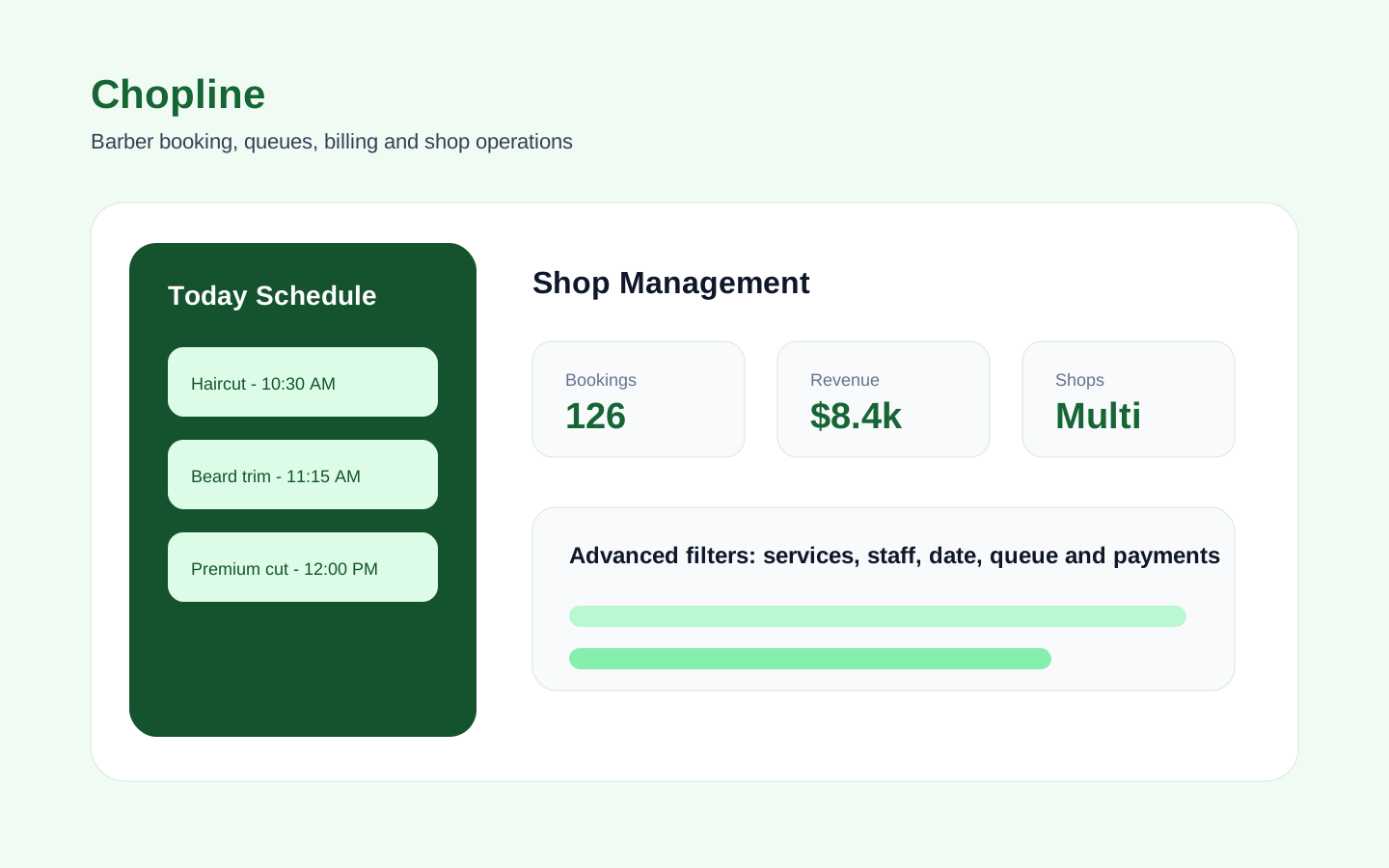
A US multi-tenant barber shop booking SaaS with appointments, filters, Stripe payments, shop management and re…
Read case study
An inbound and outbound call tracking SaaS with dialers, recordings, AI transcription, routing, Stripe billing…
Read case studyNo — I build custom e-commerce and marketplace platforms in React and Django for businesses that have outgrown what a template store can model: multiple vendors, custom inventory rules, or a checkout flow that needs to do more than a standard cart.
Yes. Phamanovix, a multi-tenant marketplace I built for my own software brand, handles multiple vendors, inventory, order tracking and payment integration in production.
Yes, including Stripe and regional providers such as JazzCash, covering checkout, subscriptions, webhooks, refunds and reconciliation — this is also core to my API integration work.
Yes. CallLoom Dashboard runs Stripe subscription billing with plans, trials and webhook-driven state changes, which is the same pattern I bring to a recurring-revenue product.
Tell me whether you are selling one catalog or running a multi-vendor marketplace — the architecture is different from day one.
Send project details