Lead and pipeline management
Capture forms, assignment rules, stage tracking and follow-up scheduling, with the pipeline stages named the way your business names them.
Off-the-shelf CRMs force your team to work the way the software wants. I build CRM systems around the workflow you already run — lead capture, agent activity, follow-ups, policies, reporting — so adoption is immediate instead of a six-month fight.
Send me your current process — even if it is a spreadsheet and a group chat. That is enough to scope a CRM.
Concrete deliverables, not a retainer with vague scope.
Capture forms, assignment rules, stage tracking and follow-up scheduling, with the pipeline stages named the way your business names them.
Attendance, activity logs, per-agent performance and group hierarchies so team leads get answers without asking for them.
Admin, manager, team lead and agent roles with permissions enforced on the API, not just hidden in the interface.
Automatic alerts when a record already exists, which is the single highest-value feature in every lead-generation CRM I have built.
Filterable operational reports, manager dashboards and CSV/Excel export for the numbers your finance team keeps asking for.
Extraction that reads submitted documents and pre-fills forms, cutting the manual typing that agents hate most.
I sit with the people who will use it daily and map the real process, including the shortcuts nobody documented.
Entities, relationships and permissions designed before any interface exists, because this is the part that is expensive to change later.
Records, pipeline and roles first — a usable slice your team can test within weeks.
Dashboards and exports added once the underlying data is proven correct.
Deployment, data migration, a walkthrough for the team, and a support window while habits settle.
Case studies where I delivered exactly this kind of work.
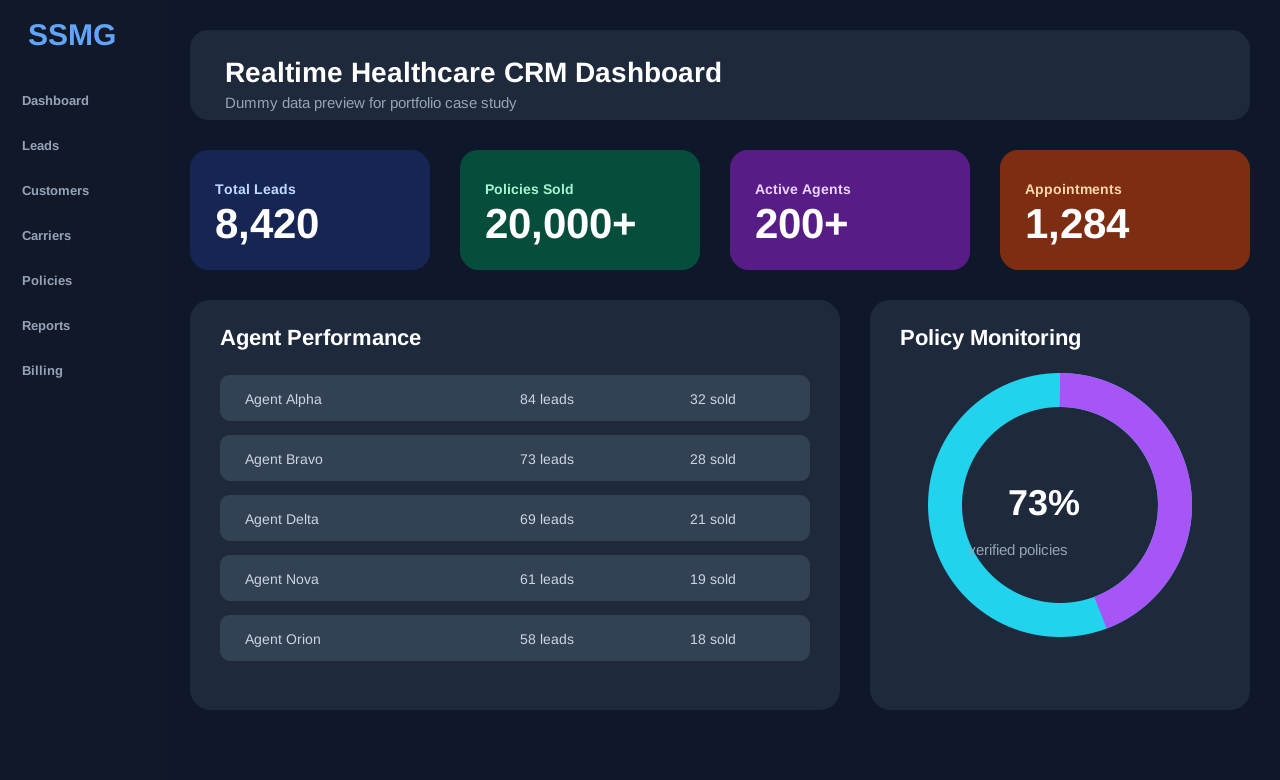
A production CRM and lead tracking system for a US healthcare client, built with React, Django, Python, AI dat…
Read case study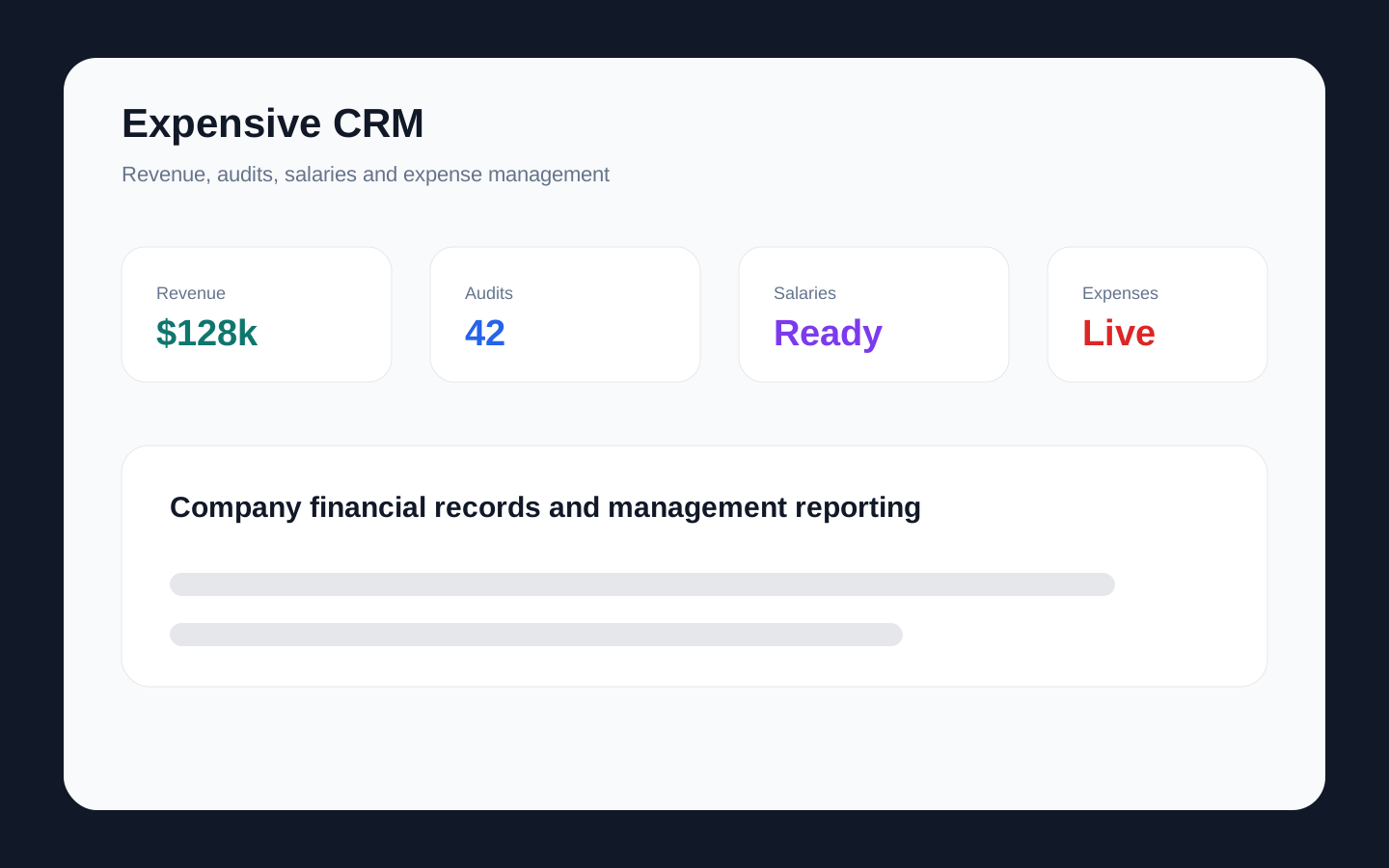
A company operations CRM for managing revenue, audits, salaries, expenses, reporting and financial visibility …
Read case study
A multi-tenant CRM for lead generation, sheet uploads, centre-wise tracking, monthly filters, policies, charge…
Read case study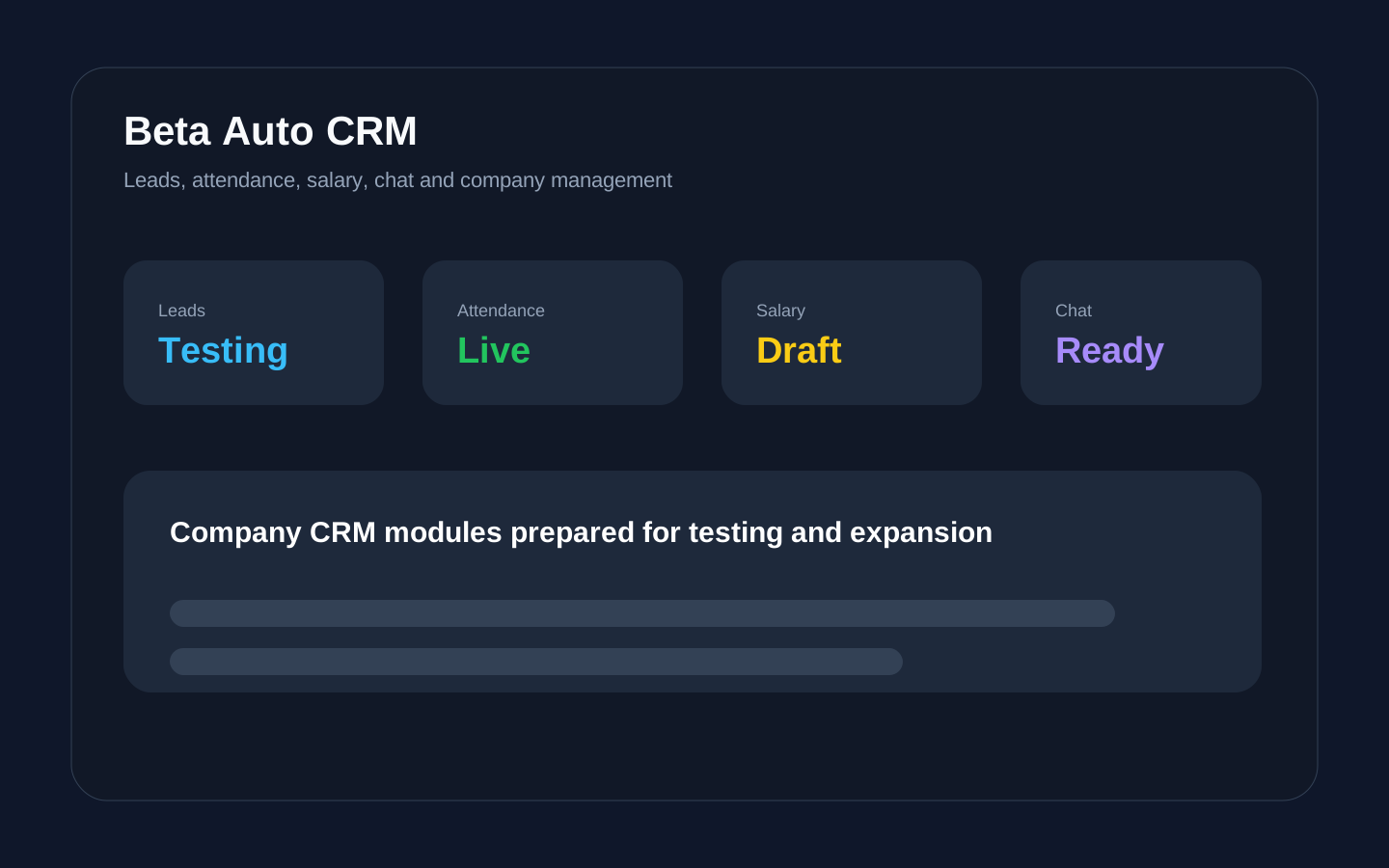
A testing-stage CRM with lead generation, salary workflows, attendance management, chat and company management…
Read case studyIt depends on how many workflows and roles the system covers. A focused CRM with lead management, roles and reporting is a smaller engagement than a multi-department platform with attendance, policies and AI extraction. I scope it after a workflow call and give a fixed range before any work starts.
A working core — records, pipeline, roles and a dashboard — is typically usable within a few weeks. Full production rollout with reporting, migrations and edge cases usually runs longer depending on how much legacy data has to move across.
Yes. REST API integration is a core part of my work — telephony, email, payment providers, spreadsheets and internal systems. If it exposes an API or a file export, it can be connected.
I have built and maintained a production healthcare lead generation CRM handling policies, carriers and patient-adjacent records. Role-based access, audit-friendly records and sanitised reporting views are part of how I build by default.
Send me your current process — even if it is a spreadsheet and a group chat. That is enough to scope a CRM.
Send project details