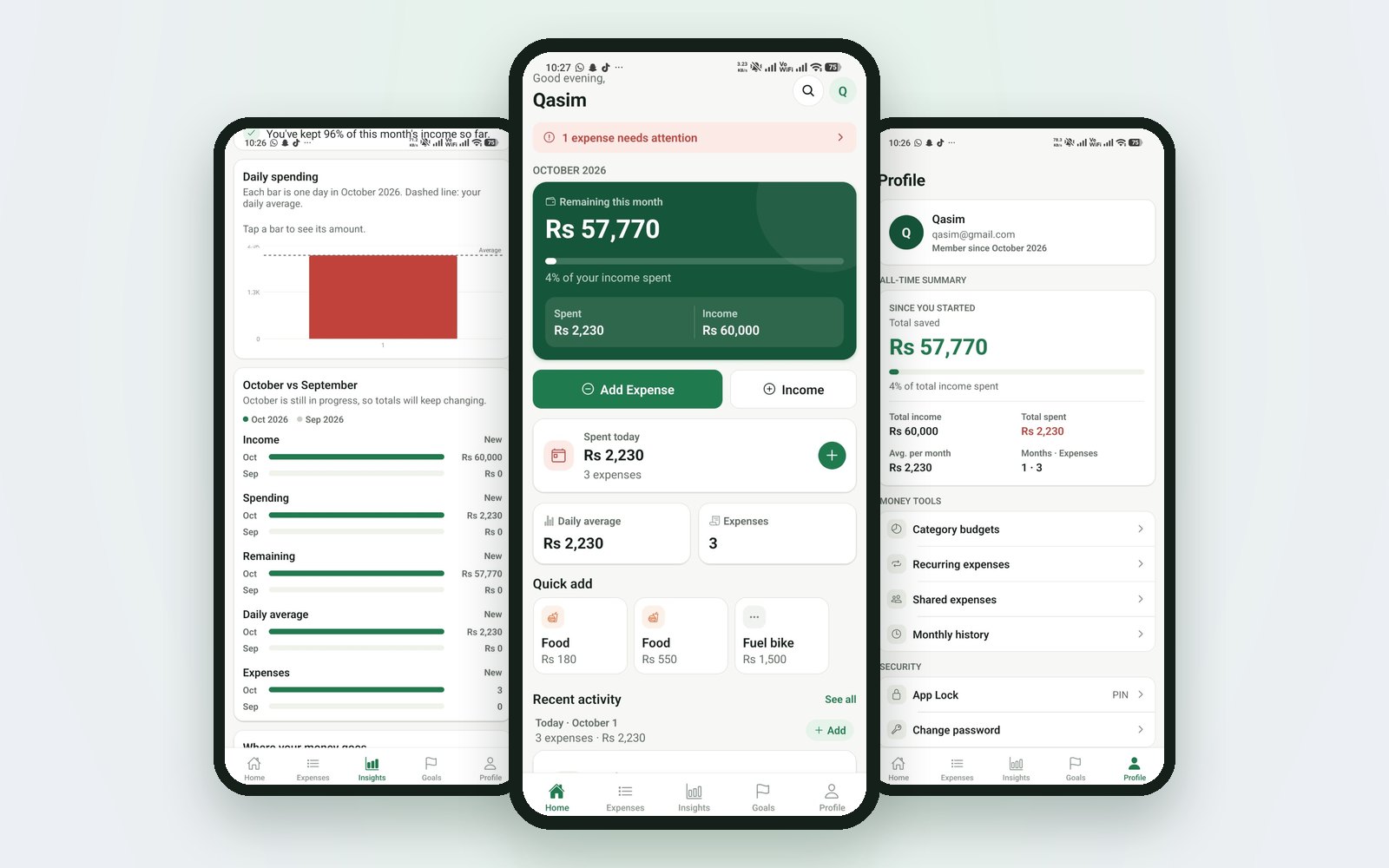
Cross-platform app builds
React Native apps for iOS and Android from a single codebase, so feature work is not duplicated per platform.
A mobile app is only as good as the API behind it. I bring the same backend discipline from my CRM and SaaS work — clean data models, proper auth, permissions that hold up — into building the mobile client that consumes it, so the app and the system behind it are designed together instead of bolted together.
Tell me what the app needs to do and whether a backend already exists — that decides where we start.
Concrete deliverables, not a retainer with vague scope.
React Native apps for iOS and Android from a single codebase, so feature work is not duplicated per platform.
The mobile client built against the same REST API powering your web product, so data stays consistent everywhere.
Token-based auth, secure storage and session refresh handled the way a production app needs it, not a demo shortcut.
Local state and sync logic for the screens that need to work without a reliable connection.
Notification delivery wired to real backend events, not a static test message.
Whether the product needs a full native-feeling app or a lighter cross-platform build, decided against your actual requirements.
The backend contract designed so the mobile app and any web app consume the same source of truth.
Screens and navigation built against the real API from day one, not against mock data.
Real device testing, offline behaviour and the failure states that only show up outside a simulator.
App store preparation and a rollout plan, with the backend already proven under the app in production.
Case studies where I delivered exactly this kind of work.
Free guide
What it costs, how to compare a freelancer with an agency or an in-house hire, and how to vet the person before you commit.
FAQ
Tell me what the app needs to do and whether a backend already exists — that decides where we start.
Send project detailsOther services