Indexing diagnosis
A crawl-level audit: what Googlebot actually receives per URL, which assets fail, and which pages return no content.
A site that Google cannot render is a site Google will not rank. Most technical SEO failures I find are not content problems at all — they are broken asset paths, JavaScript-only rendering and pages that never return real HTML.
Send me the domain. I will tell you what Googlebot actually sees before you commit to anything.
Concrete deliverables, not a retainer with vague scope.
A crawl-level audit: what Googlebot actually receives per URL, which assets fail, and which pages return no content.
Static generation or server rendering so every URL returns complete HTML with its own title, description and canonical.
LCP, CLS and INP measured and fixed — image handling, bundle splitting, font loading and layout stability.
Valid JSON-LD for Person, Organization, Article, Product, BreadcrumbList and FAQPage, tested against the Rich Results Test.
Crawlable internal linking, hub pages, breadcrumbs and a sitemap that reflects the real structure.
Correct robots.txt, an accurate XML sitemap and canonical handling that prevents duplicate-content dilution.
I fetch your URLs the way a crawler does and compare that against what a browser shows. The gap is usually the whole problem.
A ranked list separating "this blocks indexing entirely" from "this is a marginal gain".
Fix how pages are delivered and how they link to each other — the two changes that move the needle most.
Measured optimisation against Core Web Vitals field and lab data.
Re-crawl, resubmit in Search Console, and confirm pages move from discovered to indexed.
Case studies where I delivered exactly this kind of work.

A developer portfolio for Muhammad Qasim showcasing SaaS, CRM, dashboard, AI automation and production work in…
Read case study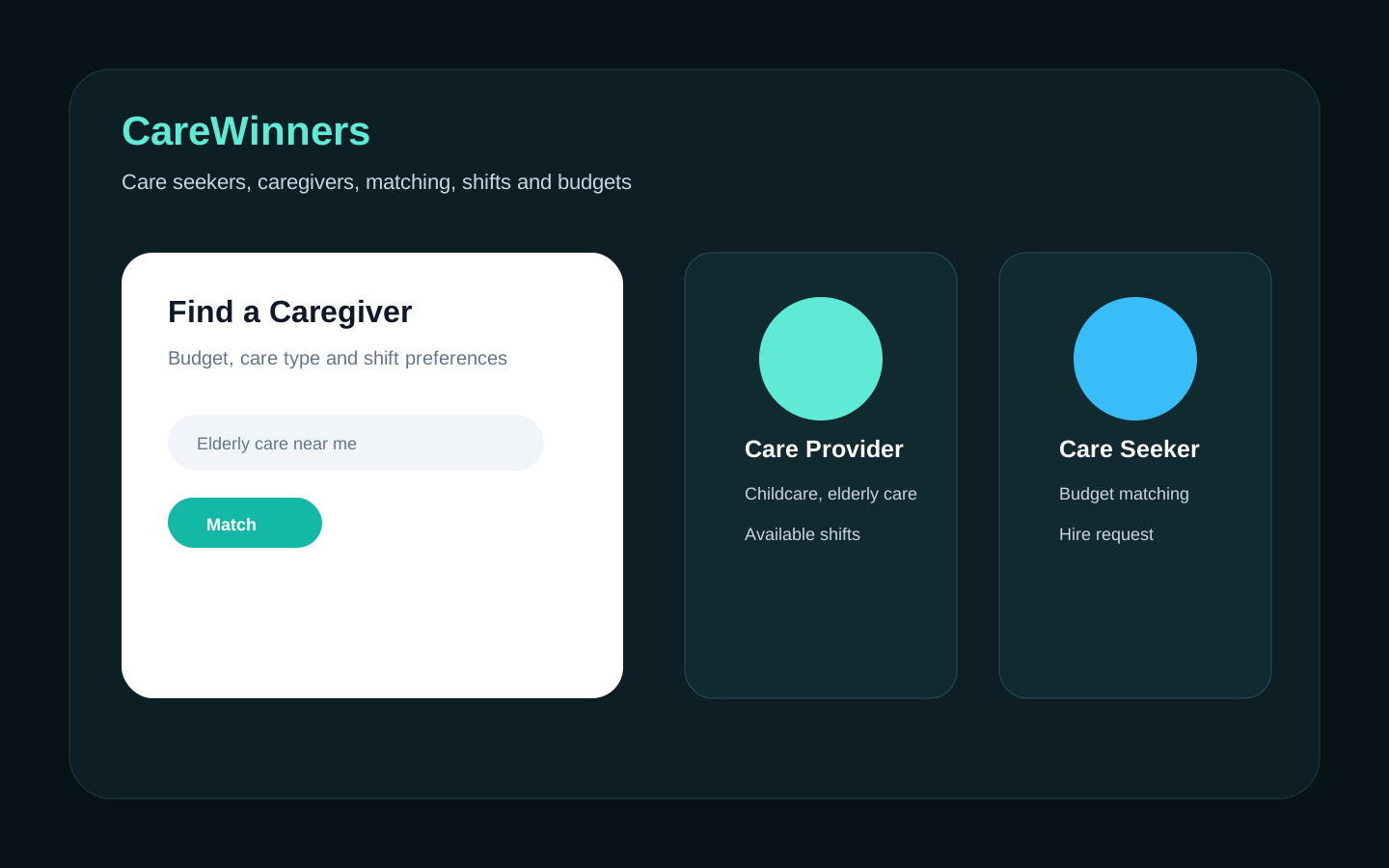
A US care service SaaS connecting care seekers with caregivers for childcare, elderly and home support, with m…
Read case study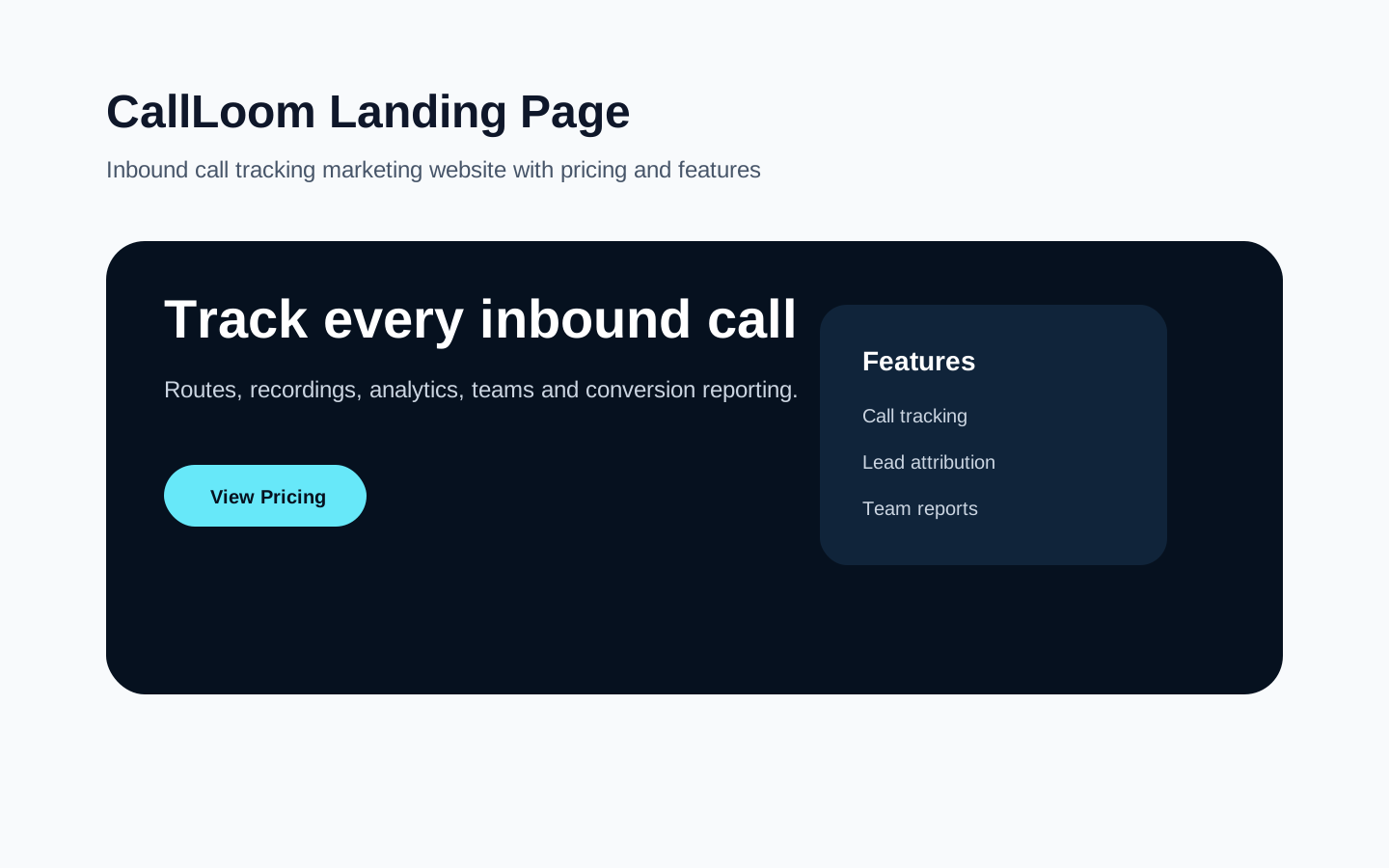
A Next.js marketing landing page for an inbound call tracking system, covering features, pricing and conversio…
Read case study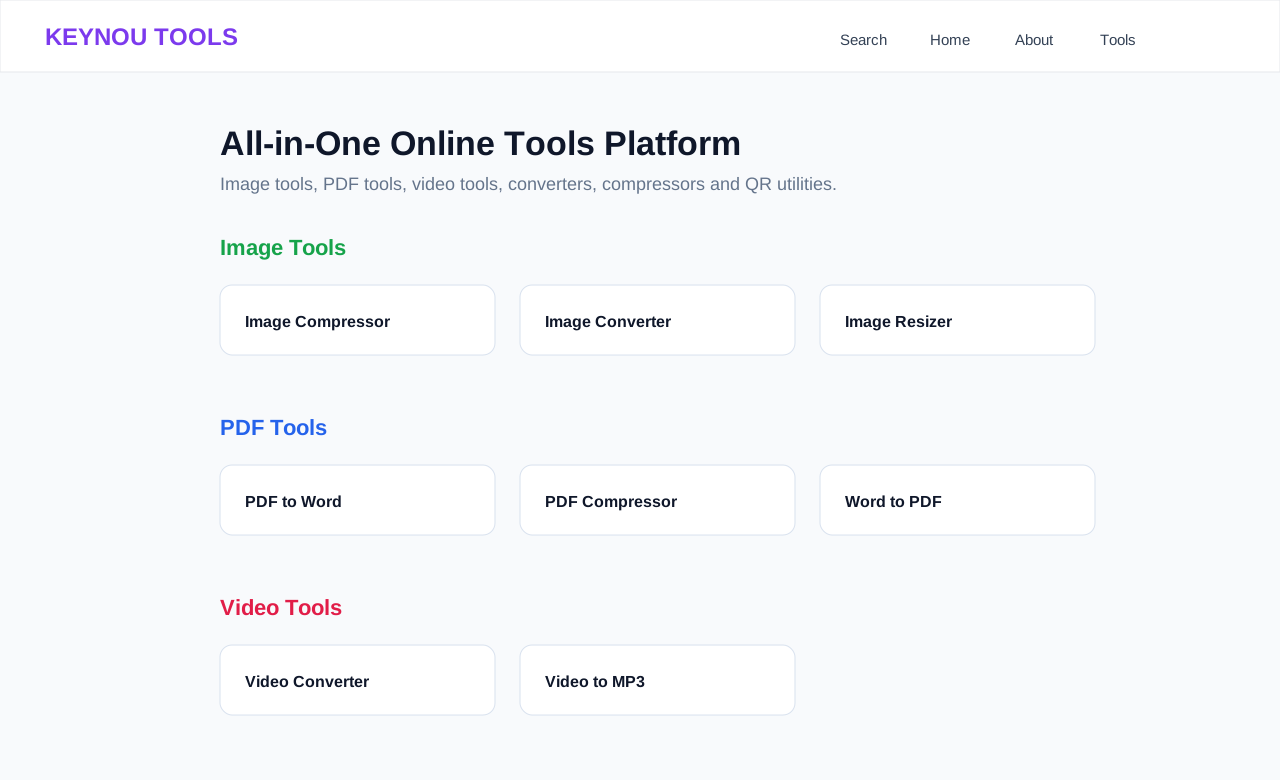
An all-in-one online tools platform with image, PDF, video, converter, compressor and QR utilities, built with…
Read case studyIt means Google knows the URL exists but has not committed crawl budget to it. The usual causes are pages that render empty without JavaScript, near-identical metadata across URLs, no internal links pointing to the page, or broken asset paths that make the page fail to render at all. All four are fixable.
Yes, but only if each URL returns real HTML. That means static generation, server-side rendering or prerendering at build time. A plain client-rendered SPA gives Google an empty shell and forces it into a slow rendering queue that it often skips for low-authority sites.
Once the pages return proper HTML and you request indexing in Search Console, individual URLs can be indexed within days. A full site-wide recrawl usually settles over two to six weeks depending on the site's crawl budget.
I handle the technical side — rendering, structure, metadata, structured data and speed. I will tell you precisely which pages are too thin to rank and what they need, but the subject-matter content is best written by whoever knows the business.
Send me the domain. I will tell you what Googlebot actually sees before you commit to anything.
Send project details