01Frontend vs backend developer: the short answer
The frontend vs backend developer split is about where the code runs and what it is responsible for. Frontend code runs in the user's browser and decides what they see, what happens when they click, and how fast the page feels. Backend code runs on a server and decides what data exists, who is allowed to touch it, and what happens when two people change it at the same time.
A full stack developer works across both. That does not mean they are equally deep in every corner of each side — it means they can take a feature from the database table to the button on the screen without handing it off.
I have worked in all three seats. I started as a web developer, spent two roles as a frontend developer building React and Next.js interfaces, and now work as a full stack developer and project lead shipping CRMs, SaaS dashboards and APIs with React, Next.js, Django and PostgreSQL. This guide is what I wish clients and junior developers knew before they wrote a job post.
The useful question is not which role sounds most senior. It is which layer of your product carries the most risk — and who is going to own it.
02What does a frontend developer do?
A frontend developer turns designs and requirements into a working interface. That means components, layouts, forms, navigation, loading and error states, and the glue that fetches data from an API and keeps the screen in sync with it.
In 2026 the job is much broader than making things look like the mockup. A good frontend developer owns accessibility, so keyboard and screen-reader users can actually use the product. They own performance, which now has a public scorecard in Core Web Vitals. They manage client state, caching and optimistic updates, and they usually maintain a design system so the fifth screen is as consistent as the first.
The typical toolset today is React, Next.js, TypeScript and a styling approach such as Tailwind CSS, plus testing tools and browser devtools. I go through the full list, what a normal day looks like, and how to evaluate a candidate in what a frontend developer does day to day.
- Builds reusable UI components and page layouts from designs.
- Connects screens to APIs and handles loading, empty and error states.
- Owns accessibility, responsiveness and Core Web Vitals.
- Manages client-side state, forms and validation feedback.
- Keeps the design system consistent as the product grows.
03What does a backend developer do?
A backend developer builds the part of the product nobody sees but everybody depends on: the API, the database schema, authentication and permissions, background jobs, integrations with third-party services, and the rules that keep data correct.
If the frontend is the shop floor, the backend is the stockroom, the till and the accounts. A slow or confusing screen is annoying. A backend that lets one customer see another customer's data, double-charges a card, or silently loses records is a business problem.
On my projects the backend is usually Python and Django with PostgreSQL, sometimes Node.js, with Celery or a similar queue for work that should not happen inside a web request. The full breakdown of responsibilities, tools and what separates a solid backend developer from a risky one is in what a backend developer actually does.
- Designs the database schema and keeps queries fast as data grows.
- Builds and documents the API the frontend and partners consume.
- Implements authentication, roles and permission checks.
- Runs background jobs, scheduled tasks, emails and webhooks.
- Integrates payment, messaging and data providers safely.
04What does a full stack developer do?
A full stack developer can build a feature end to end: add the column, write the migration, expose it through the API with the right permission check, build the form, handle the validation error on screen, and deploy it. The value is not that one person replaces two. It is that nothing gets lost at the boundary.
Most of the bugs I fix on inherited projects live exactly at that boundary. The frontend assumes a field is always present, the backend sometimes returns null. The backend paginates, the frontend only ever shows page one. A full stack developer sees both halves of the contract and tends to catch those mismatches before they ship.
There is a trade-off. A full stack developer is rarely the deepest specialist on either side. For a product with a heavy design system and complex animation, or one with serious data volume and compliance needs, you eventually want specialists. But for getting a product from idea to production, a capable full stack developer is usually the most efficient hire — which is why I offer full stack development as a single engagement rather than splitting it.
Two examples from my own work show why the end-to-end view matters. The CallLoom call tracking dashboard combines a React interface with a Django backend handling dialers, recordings, transcription, Stripe billing, webhooks and multi-tenant management. A slick dashboard would have been worthless if the webhook and billing layer underneath it were unreliable, and vice versa.
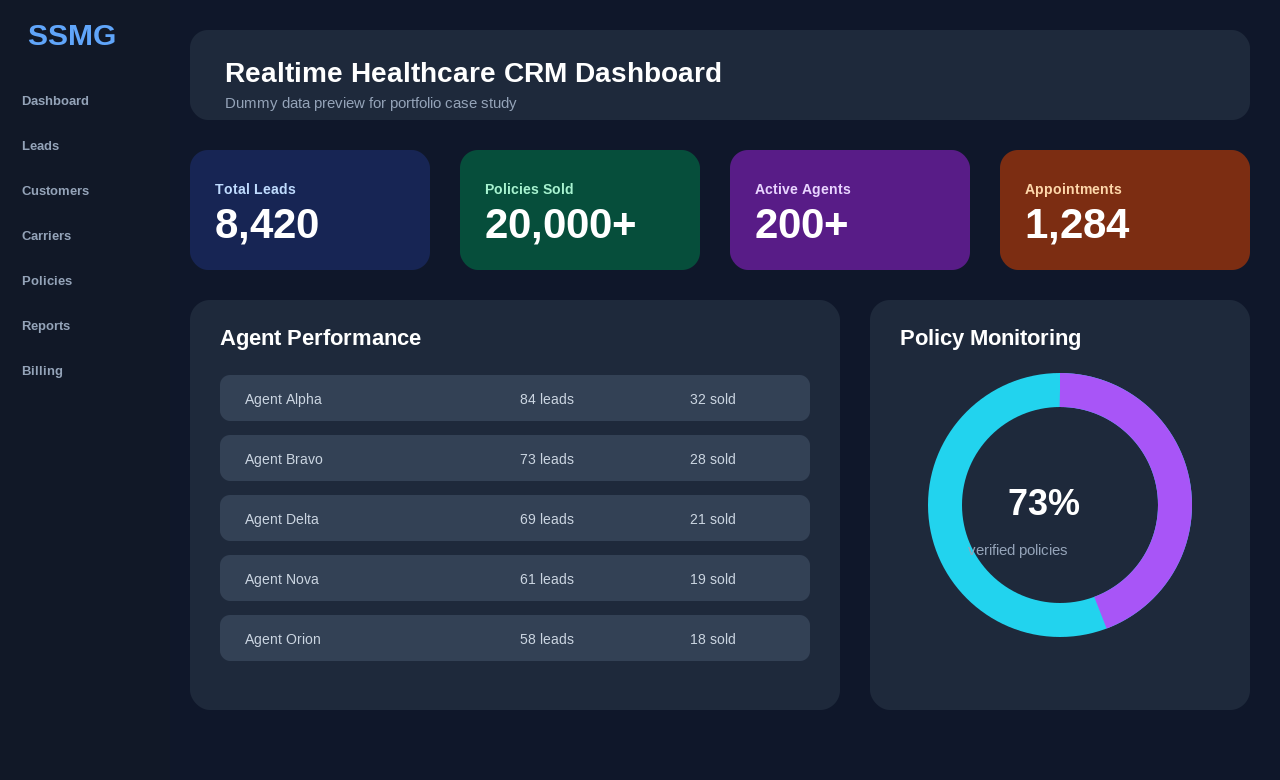
The healthcare lead generation CRM is similar: React on the front, Django and Python on the back, with AI-assisted data extraction feeding records that sales staff work through all day. Most of the real decisions — how leads are deduplicated, who can see which record, how imports fail — were backend decisions that showed up as frontend experience.
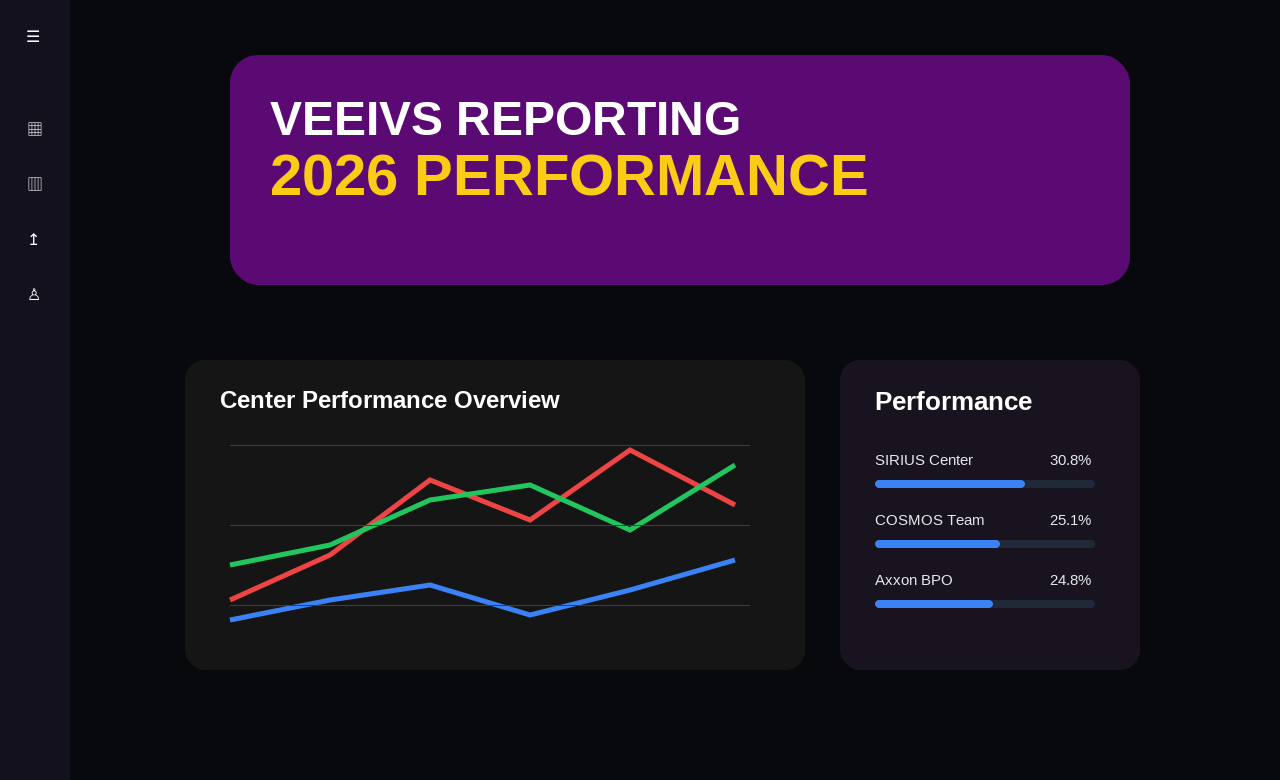
The Veeivs reporting platform made the same point from the other direction. Ranking agents and teams across branches looks like a charting problem, but the hard part was producing numbers that everyone trusted: consistent time windows, correct aggregation and queries fast enough to keep the dashboard live. The frontend and backend work could not be planned separately.
Budget follows the same logic. Hiring two specialists costs more than one generalist, but rework at the boundary costs more than either. If you are trying to estimate a budget, I break down typical ranges in how much a full stack developer costs.
Full stack does not mean expert at everything. It means able to own a feature across every layer and knowing when a problem needs a specialist.
05Where does a web developer fit in?
"Web developer" is the broadest title of all, and it means different things to different people. In some companies it describes someone who builds and maintains marketing websites, often with a CMS. In others it is simply an older name for what we would now call a full stack developer. My first role carried that title, and the work covered responsive sites, front-end components and enough server-side work to keep them running.
When you see the title on a CV or use it in a job post, look past it to the actual work. Ask which projects the person built, which parts they owned, and what happened on the server. A web developer who has mostly assembled CMS themes is a very different hire from one who has built a custom booking system with its own database and payment flow.
The same goes for titles like "software engineer", "React developer" or "Python developer". They describe a toolset or a seniority band, not a responsibility. The frontend, backend and full stack labels are more useful precisely because they describe which layer of the product someone owns.
06Frontend vs backend developer skills and tools compared
The skills overlap more than job posts suggest. Both sides need Git, testing habits, an understanding of HTTP, and the discipline to write code someone else can maintain. Where they differ is in what they optimise for: the frontend optimises for the human in front of the screen, the backend for correctness, security and throughput.
One practical difference is feedback speed. A frontend developer sees the result of a change instantly in the browser. A backend developer often only sees the consequences of a design decision weeks later, when data volume grows or an edge case appears in production. That shapes how each side works: frontend developers iterate visually, backend developers think harder up front and lean on tests and constraints.
Here is how the toolsets typically break down on the kind of web products I build.
- Frontend languages: TypeScript, JavaScript, HTML and CSS. Backend languages: Python, JavaScript or TypeScript on Node.js, and SQL.
- Frontend frameworks: React, Next.js, Vite, Tailwind CSS. Backend frameworks: Django and Django REST Framework, Node.js with Express or similar.
- Frontend concerns: accessibility, responsive layout, rendering strategy, client state, Core Web Vitals. Backend concerns: data modelling, transactions, authentication, rate limiting, queues, caching.
- Frontend testing: component tests, end-to-end browser tests, visual checks. Backend testing: unit and integration tests against a real database, API contract tests.
- Shared ground: REST API design, Git, CI pipelines, debugging, reading logs, and talking clearly to non-technical stakeholders.
07How frontend and backend developers work together
The API is the contract between the two sides. On a healthy team, frontend and backend developers agree on the shape of each endpoint before either writes much code: field names, which fields can be null, how errors are returned, how pagination works, and what a permission failure looks like.
Ownership of validation is a good example of where teams go wrong. The frontend should validate for a pleasant experience — instant feedback, no wasted round trips. The backend must validate for correctness, because anything sent from a browser can be forged. Both sides doing it is not duplication; it is two different jobs.
When that agreement is skipped, the frontend developer builds against guesses and the backend developer changes things the frontend depends on. The result is a week of integration bugs at the end of every sprint. A shared schema — OpenAPI, typed client generation, or even a well-maintained document — removes most of that friction.
The same discipline applies when the backend talks to someone else's API. Payment providers, telephony platforms and CRMs fail in quiet ways, and the backend developer has to make sure those failures surface instead of corrupting data. I wrote up the patterns I rely on in building third-party integrations that fail safely, and most of the same thinking applies to the contract between your own frontend and backend.
- Agree endpoint shapes, error formats and pagination before building.
- Treat nullable fields and empty states as part of the contract.
- Version or announce breaking API changes; never change them silently.
- Share a staging environment so both sides test against real responses.
08Where the frontend and backend line blurs
Modern frameworks have moved the line. With Next.js, a "frontend" developer writes server components, route handlers and server actions that run on a server and can talk to a database directly. With Django templates or HTMX-style approaches, a "backend" developer renders most of the interface. The job titles have not caught up with the tools.
This matters for hiring because the framework choice changes what skills you need. A product built on Next.js needs someone comfortable with caching semantics and the server-client boundary. A logged-in dashboard built with React and Vite on top of a Django API keeps the split cleaner. I explain how to make that call in choosing between React and Next.js for your project.
Even my frontend roles were never purely frontend. At Graana I was titled a frontend developer but also designed SQL data models and built REST APIs, because that is what the features needed. That is normal, and it is a good sign in a candidate.
09Which developer do I need for my project?
Start from the product, not the job title. Ask which layer is hardest, which is riskiest, and how many people you can realistically manage. Then match the role to the answer.
It also helps to be honest about management capacity. Two specialists need someone to coordinate them, settle disagreements about the API and decide whose bug it is when something breaks at the boundary. If that someone is you and you are not technical, you will spend a lot of time translating. One accountable full stack developer removes that coordination cost, at least until the product is big enough to justify a small team with a technical lead.
For most founders and small businesses building their first web application, the answer is one full stack developer who owns the whole thing, with clear handover documentation so specialists can join later. If you are weighing freelancers, agencies and in-house hires as well, my guide to hiring a freelance full stack developer covers that decision.
- You have a working backend or API and need a new interface, redesign or faster site: hire a frontend developer, or use a React development service.
- Your interface is fine but data is slow, wrong, insecure or needs integrations: hire a backend developer, for example through Django backend development.
- You need a new product — a CRM, SaaS, booking or reporting platform — built from scratch: start with a full stack developer.
- You need to connect existing systems such as payments, telephony or a third-party CRM: a backend developer with integration experience, or API development and integration work.
- You have an established product with a team: add the specialist your bottleneck demands, not another generalist.
If you cannot say which layer is the bottleneck, that is itself the answer: hire a full stack developer who can find out.
10Career paths: frontend, backend or full stack developer?
If you are a developer choosing a direction, none of the three is a dead end, and the boundaries are porous. Most people start on one side because it is where their first job was, then drift toward whatever problems they enjoy.
Frontend tends to suit people who care about how things feel, are patient with browser quirks, and like visible results. Backend tends to suit people who enjoy data, correctness and systems that keep working at 3am. Full stack suits people who want to own outcomes and can tolerate being the second-best expert in the room on any one layer.
Seniority looks similar on every track. Juniors implement well-defined tasks. Mid-level developers own features. Seniors own decisions: they choose the architecture, spot the risk before it ships, review other people's work and explain trade-offs to non-technical stakeholders. My own path went from web developer to frontend developer to full stack developer and team lead, and the biggest jump was not a new framework — it was learning to own the decision rather than the ticket.
- Pick one side and get genuinely good before broadening.
- Learn enough of the other side to read its code and question its assumptions.
- Ship complete projects end to end, even small ones — they teach the boundary.
- Seniority is about judgment and ownership, not the number of tools on your CV.
11Working with me as your full stack developer
I build web applications end to end — React and Next.js on the frontend, Django, Python, Node.js and PostgreSQL on the backend — and work remotely with clients worldwide from Rawalpindi, Pakistan. Most of my projects are CRMs, SaaS platforms, dashboards and API integrations where the frontend and backend have to be designed together.
If you are not sure which kind of developer your project needs, describe what you are building on the contact page and I will tell you honestly whether it is a frontend job, a backend job or a full stack one, and whether I am the right fit.