01What does a freelance full stack developer actually do?
A freelance full stack developer builds the whole working product: the interface people click, the API behind it, the database that stores everything, and the deployment that keeps it running. If you are trying to hire a full stack developer, that is the thing you are buying — one person who can take a feature from a sentence in a brief to something live in production.
In my own work that usually means React or Next.js on the frontend, Django or Node.js on the backend, and PostgreSQL underneath. The specific stack matters less than the fact that one person understands every layer, so a change to a form does not require three people to coordinate a database migration.
The freelance part changes the relationship rather than the work. A freelance web developer is an independent contractor: you agree a scope or a block of time, they deliver it, and you are not taking on an employee. That flexibility is the main reason founders and small teams hire freelancers for a first build or a defined piece of a larger product.
Full stack does not mean expert in everything. A good one is strong in one or two layers and competent in the rest, and is honest about where the edges are. If you want the longer version of where the roles split, I wrote a separate breakdown of frontend vs backend vs full stack developers.
- Designs the data model and writes the migrations.
- Builds REST or GraphQL APIs, authentication and permissions.
- Builds the interface: forms, dashboards, tables, responsive layouts.
- Integrates third parties — payments, email, telephony, CRMs.
- Deploys, monitors and fixes what breaks after launch.
02When should you hire a full stack developer — and when should you not?
Hiring one full stack developer makes most sense when the product is still taking shape. An MVP, an internal tool, a CRM built around how your team actually works, a client portal, a dashboard over data you already have — these are projects where one person holding the whole picture moves faster than a team that has to agree on interfaces first.
It also makes sense when you already have a product and need someone to own a vertical slice: a new billing module, a reporting area, an integration with a partner API. A full stack developer can ship that end to end without borrowing time from three specialists.
It makes less sense when the work is deep in one specialism. A complex native mobile app with heavy device integration, a machine learning pipeline, or a pixel-perfect marketing site with elaborate animation each deserve a specialist. And once a product has several teams shipping in parallel, you need specialists and a lead, not one generalist carrying everything.
A useful test: if you can describe the first release in a page, and it is mostly forms, data, workflows and dashboards, one strong full stack developer is usually the fastest route to it.
03What to prepare before you hire a full stack developer
You do not need a fifty-page specification to hire a developer. In my experience long specs written before anyone technical is involved are often more harmful than helpful, because they lock in assumptions nobody has tested. What you do need is enough clarity that a developer can ask good questions and give you a meaningful estimate.
The most useful thing a client can bring to a first call is a description of the people who will use the product and the two or three things they need to do in it. “Agents log calls, managers see team performance, admins manage users” tells me more than a list of forty features. From that I can sketch the data model, the roles and permissions, and the first milestone.
It also helps to know what already exists. If you are replacing spreadsheets or an old system, bring examples of the data. If the product has to talk to other tools — a telephony provider, a payment processor, an existing CRM — list them early, because integrations are where estimates most often go wrong. For domain-specific builds, my pages on custom CRM development and SaaS product development describe what those projects typically involve.
- Who the users are, and the two or three jobs each of them needs to do.
- The one workflow that proves the product works.
- Existing data, spreadsheets or systems that need importing or replacing.
- Integrations that are non-negotiable for launch.
- A rough budget range and a target date, even if both are flexible.
- Two or three products you like the feel of, as a reference point.
Sharing a budget range is not a weakness in negotiation. It lets a good developer tell you what is realistic for that money instead of guessing, and it filters out mismatches in the first call.
04Freelance vs agency vs in-house: which fits your project?
This is the decision that shapes everything else, and the honest answer is that each model is the right one for a different situation.
A freelancer gives you direct access to the person writing the code, lower overhead, and flexibility to scale up or down. The trade-off is capacity and continuity: one person can get sick, and you need them to document properly so the work survives them.
An agency gives you a team — design, project management, QA — and someone contractually responsible for replacing people. You pay for that structure, and you often talk to an account manager rather than the developer. An in-house hire gives you long-term ownership and context, but takes months to recruit and carries salary, benefits and management cost whether or not there is work that month.
I go through the trade-offs properly, with a decision framework, in freelance developer vs agency vs in-house team.
- Choose a freelancer for an MVP, a defined module, or a product that needs one accountable builder.
- Choose an agency when you need design, development and QA delivered as a package and have the budget for it.
- Choose in-house when the software is your core product and you will be building it for years.
05How much does it cost to hire a full stack developer?
Cost depends far more on where the developer is based, how senior they are and how well your scope is defined than on the technology. As a general market picture in 2026, freelance full stack rates in North America and Western Europe typically sit well above those in Eastern Europe, Latin America and South Asia, and agencies anywhere charge a premium over individual freelancers for the structure they provide.
The pricing model matters as much as the rate. Hourly billing suits evolving work, fixed price suits a tightly defined scope, and a monthly retainer suits ongoing product development. Each moves risk between you and the developer in a different way.
The other big driver is the product itself. The number of user roles, the depth of permissions, how many third-party integrations there are and whether existing data has to be migrated will move an estimate far more than the choice between React and Vue. Two products that look similar in a mock-up can be months apart underneath.
Then there are the costs people forget: hosting, third-party services, the time you spend reviewing work, and maintenance after launch. I break all of this down, with general market ranges by region and a way to budget an MVP, in how much it costs to hire a full stack developer.
The cheapest quote is rarely the cheapest project. Rework, missed edge cases and a rebuild a year later cost far more than the difference between two hourly rates.
06Where to find a full stack developer for hire
There are four realistic channels, and they produce very different candidates.
Freelance marketplaces give you volume and built-in payment protection, but you will spend real time filtering, and ratings measure client satisfaction on small jobs more than engineering quality on large ones. Referrals from people who have shipped software are the highest-signal source, though slow. Personal sites and portfolios let you see how someone thinks before you talk to them. Developer communities and open-source work show you real code.
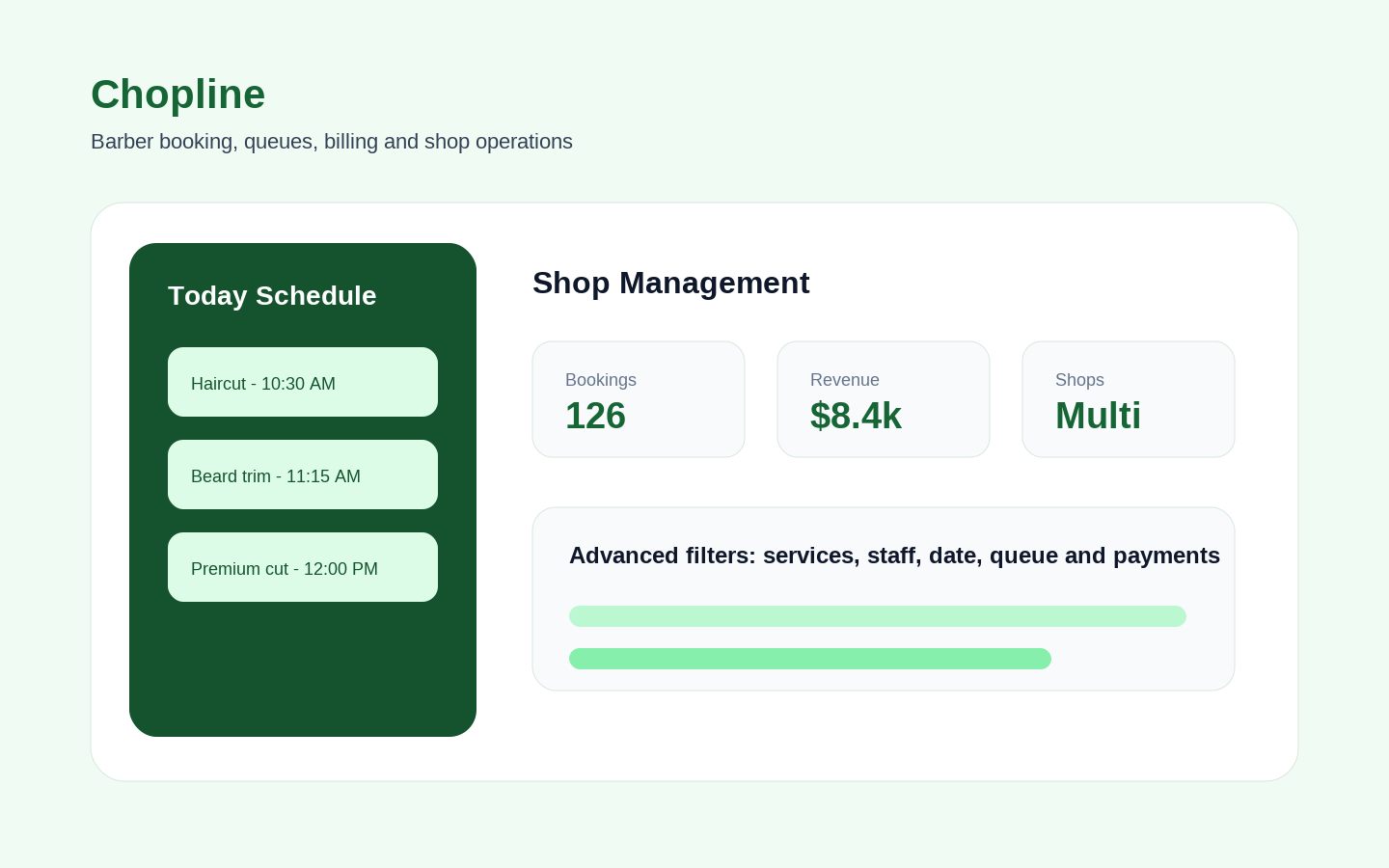
Whatever the channel, look for evidence of shipped products in a domain near yours. Someone who has built multi-user CRMs, booking systems or SaaS dashboards has already solved the permissions, data and workflow problems your project will hit. That is worth more than a long list of frameworks.
Pay attention to how candidates present themselves in writing, too. A professional developer who can explain a technical decision clearly on a portfolio page will usually explain your project's trade-offs clearly in an update. For remote work in particular, written communication is half the job, so treat it as a skill you are hiring for rather than a nice extra.
- Live products or detailed case studies, not just screenshots.
- Written explanations of technical decisions — a blog, case studies, documentation.
- Work in a similar domain or at a similar scale.
- A clear statement of what they do and do not take on.
07How to vet a freelance full stack developer before you hire
Vetting is where most bad hires could have been avoided. The goal is not to quiz someone on syntax; it is to find out how they think about your problem, how they handle ambiguity, and whether they tell you things you did not want to hear.
Ask them to walk you through a past project: what the data model looked like, what went wrong, what they would change. Ask how they would approach the first release of yours. Listen for questions back — about users, edge cases, volume, integrations. A developer who quotes immediately without asking anything has not understood the problem yet.
For anything substantial, a small paid trial task is the best signal available. It shows code quality, communication and reliability in one go. I have written the full list of questions to ask before hiring a developer, along with what good answers sound like and how to structure a trial.
Seniority shows up in judgement more than in years. An experienced developer will talk about what to leave out, what is risky, and how the system will be maintained, not only about how to build features. I wrote about those signals in what actually makes a senior developer, which is a useful lens when you are comparing two candidates who both look capable on paper.
- Can they explain a past technical decision and its trade-offs clearly?
- Do they ask about your users and workflows before talking about technology?
- Will they give you access to the repository and hosting from day one?
- Do they have a view on testing, backups and what happens after launch?
08How working with a remote full stack developer works day to day
Most freelance engagements are remote now, and remote works well when the rhythm is explicit. The pattern I have found most reliable is short written updates, a weekly call, a shared task board, and a staging environment where you can click through work in progress instead of reading about it.
Time zones are a factor but rarely the deciding one. A few hours of daily overlap is enough for real-time questions, and the rest of the day is productive focus time. Working with clients in the US from Pakistan, the gap often means you brief something in your afternoon and review it the next morning.
Tooling matters less than habits, but a typical setup is a shared repository with pull requests, a task board you can reprioritise, a chat channel for quick questions and a video call for anything that needs discussion. Decisions made on calls should be written down afterwards, so the project never depends on someone remembering what was agreed three weeks ago.
Contracts, payment and intellectual property need to be settled before work starts, not after. If you are considering an offshore or remote developer, I cover time-zone overlap, communication cadence, payments and IP in detail in working with a remote developer from Pakistan.
Insist on staging. Seeing a feature working on a real URL every week is worth more than any status report.
09Red flags when hiring a freelance web developer
Some warning signs show up in the first conversation; others only show up two months in, when they are expensive. These are the ones I would act on early.
None of these is automatically disqualifying on its own — a developer early in their freelance career may not have many live products yet, for example. But two or three together are a strong signal, and the ones about ownership and transparency are worth treating as dealbreakers regardless of how good the rest of the conversation felt.
- A fixed quote for a large project with no questions asked and no written scope.
- Reluctance to put code in your repository or hosting in your account.
- No live work and no ability to explain past projects in detail.
- Promises of a complete platform in an implausibly short time.
- Long silences, then a large batch of work delivered at once.
- Every problem is someone else's fault: the previous developer, the framework, the client.
- No mention of testing, backups, security or what happens after launch.
The single strongest green flag is a developer who tells you to cut scope from your first release. It means they care about you shipping, not about billing more hours.
10How to start an engagement so it goes well
The first two weeks set the tone for the whole project. A good start does not require a long specification; it requires a shared understanding of the first release and a working rhythm.
Start with a short discovery: who uses the product, what the three most important workflows are, what data exists today, and which integrations are non-negotiable. From that, agree a first milestone small enough to ship in a few weeks. For SaaS products specifically, I wrote about scoping a SaaS MVP and its timeline, which applies to most new builds.
Then set up the boring infrastructure on day one: your repository, your hosting account, a staging environment, a task board, and an agreed update cadence. Everything after that is iteration.
Plan for the period after launch as well. Real users will find edge cases nobody predicted, and the first few weeks of live use are usually the most productive weeks of the whole project. Agree upfront how bug fixes, small changes and ongoing development will be handled once the first release is out, whether that is an hourly arrangement, a monthly retainer or a new milestone. Products that are built for web applications that keep evolving need someone who expects to stay involved.
- Week one: discovery, data model draft, repository and staging set up.
- Week two: first working feature on staging, end to end.
- From then on: weekly demos, a prioritised backlog, and small, frequent releases.
11How hiring Muhammad Qasim as your full stack developer works
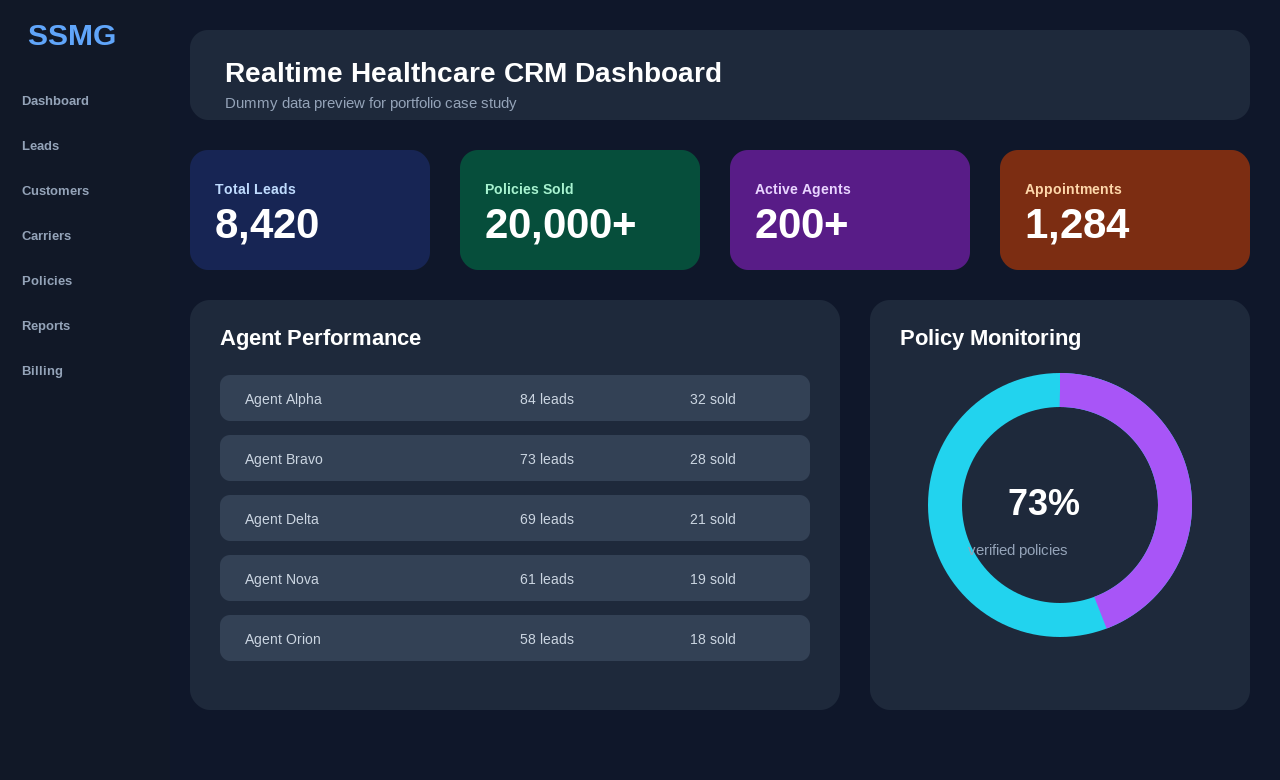
I am Muhammad Qasim, a full stack developer based in Rawalpindi, Pakistan, working remotely with clients internationally. I build with React, Next.js, Django, Node.js and PostgreSQL, and most of my work is CRMs, SaaS platforms, dashboards and APIs — including a healthcare lead generation CRM for a US client and the CallLoom call operations dashboard.
An engagement with me starts with a call about your users and workflows, followed by a written scope for the first milestone. You own the repository and hosting from day one, you see progress on staging every week, and you get regular written updates. I take on new builds through my full stack development service, as well as defined modules on existing products.
If you have a project in mind, tell me about it on the contact page with a short description of what you are building and who it is for. I will reply with questions, an honest view on whether I am the right fit, and a suggested first step.