01What software architecture for web applications means in practice
When people talk about software architecture for web applications, they often picture boxes and arrows: a load balancer, five services, a message bus. In practice, on a product team, architecture is much more modest and much more important. It is the set of decisions that are expensive to reverse once real users and real data depend on them.
Which framework renders the UI is reversible with effort. How tenants are separated, how records are identified, where business rules live and how data moves between systems are not. Those are the decisions I slow down for.
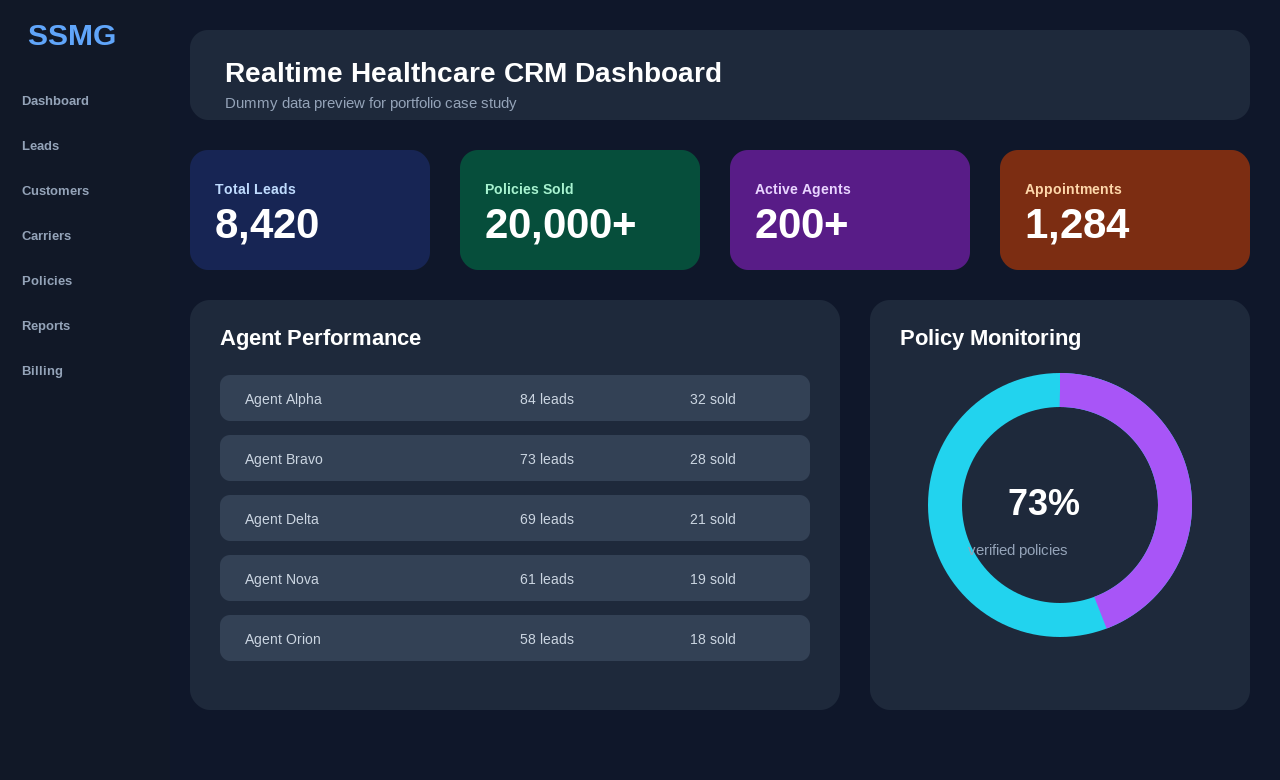
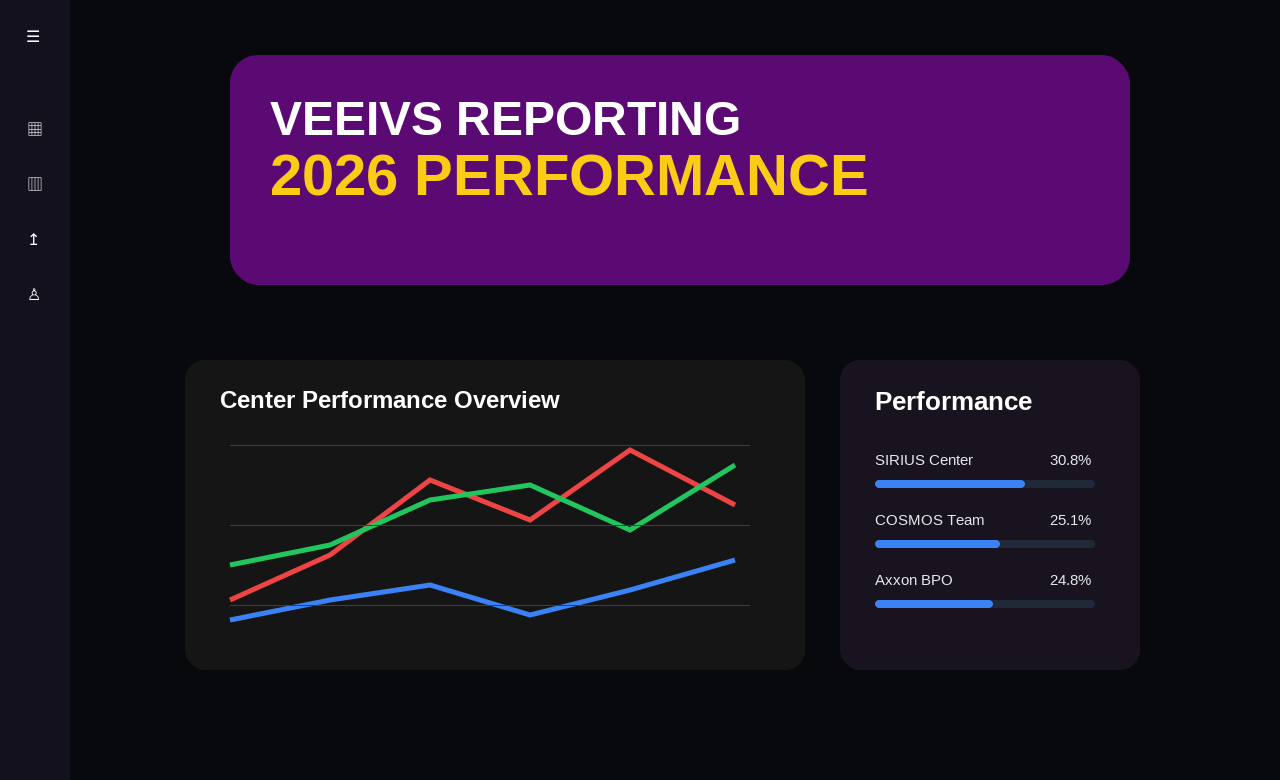
I have made these calls on call tracking platforms, healthcare CRMs, multi-branch reporting tools and an offline-capable expense tracker. The pattern that holds across all of them: start simple, make the boundaries explicit, and leave yourself room to change your mind. A scalable architecture is less about handling a million users on day one and more about not having to rewrite anything when you reach ten thousand.
- Architecture is the set of decisions that are costly to reverse — identify them early and spend your thinking there.
- Everything else should be easy to change, which is itself an architectural property.
- The right architecture for a five-person team is different from the right architecture for a fifty-person team.
If you cannot name the three decisions in your system that would be hardest to undo, you have not done architecture yet — you have done setup.
02Layering and boundaries: where business rules should live
The single most useful architectural habit is deciding where business rules live, and keeping them there. In a typical Django or Node.js web application architecture I use three layers: a thin transport layer (views, controllers, API handlers), a service layer that holds the actual rules, and a data layer of models and queries.
Views parse input, call a service, and shape the response. They do not decide whether a lead is a duplicate or whether a payroll run can be approved. That logic lives in a service function that can be called from an API endpoint, a background job, an admin action or a test without dragging HTTP along with it.
This sounds like ceremony until the first time the same rule is needed in two places. A CRM that checks for duplicate leads in the web form but not in the CSV import, or a reporting tool that calculates a ranking one way on the dashboard and another way in the export, is almost always a system where rules leaked into views. One service function, called from everywhere, removes that whole class of bug.
Boundaries matter just as much between features as between layers. In a CRM, leads, policies, agents and billing are separate modules. Each owns its tables and exposes functions to the others. Billing does not reach into the leads tables and update a column directly; it calls the leads module. That one rule is what later makes a module extractable, testable and understandable by someone new.
- Keep views and controllers thin: parse, authorise, delegate, respond.
- Put business rules in plain service functions with explicit inputs, not in model save hooks or signals that fire invisibly.
- Give each feature module ownership of its tables; other modules go through its public functions.
- Treat cross-module imports as a design smell worth a second look in code review.
03Monolith vs microservices: why I start with a modular monolith
Every team eventually asks whether they should be using microservices. For small and medium teams my answer is almost always no — not yet. A well-structured monolith gives you one deploy, one database transaction, one place to search for code and one set of logs. Microservices trade all of that for independent deployment and scaling, which only pays off when you have independent teams and genuinely different scaling profiles.
What I build instead is a modular monolith: one deployable application with hard internal boundaries, as described above. It keeps the operational cost low while preserving the option to split later along lines you already drew. CallLoom, a large multi-tenant call tracking platform with dialers, recordings, QA, billing and webhooks, is one production system organised as backend modules — exactly this shape.
The full trade-off — including the concrete signals that mean it really is time to extract a service, and how to migrate without a big-bang rewrite — is in my deep dive on monolith vs microservices for small teams.
Microservices solve an organisational problem — many teams stepping on each other. If you do not have that problem, you are paying for a solution you cannot use.
04Data modelling with PostgreSQL: the decision that outlives the code
Code gets rewritten. Data stays. That is why I treat the database schema as the most important artifact in any system design, and why PostgreSQL is my default: real transactions, strong constraints, JSONB when you need flexibility, full-text and trigram search, and row-level security when you need a second line of defence.
A few rules have saved me repeatedly. Put constraints in the database, not only in application code — a unique constraint is enforced on every path, including the bulk import someone writes in a hurry. Use opaque identifiers such as UUIDs for anything visible in URLs or exports. Store money as integers or decimals, never floats. Record who changed what and when on any table that matters to a business process.
For SaaS products, the tenancy model is part of data modelling and the hardest decision of all to reverse. I wrote separately about choosing a multi-tenant isolation model because it deserves its own afternoon of thought.
Resist the urge to model for imagined future requirements. A generic "entity" table with key-value attributes looks flexible and becomes impossible to query, index or validate. Model the business as it actually is today, with real columns and real relationships, and use migrations to change it when the business changes. PostgreSQL migrations are cheap; a schema nobody understands is not.
- Enforce uniqueness, foreign keys and not-null in the schema, not just in forms.
- Design indexes from the queries you actually run, composite indexes in filter order.
- Use migrations for every change, reviewed like code, and make them reversible where possible.
- Keep an audit trail on business-critical tables from the start; retrofitting history is painful.
05API design: contracts that survive change
An API is a promise to every client that uses it — your own frontend, a mobile app, a partner integration. Breaking that promise is far more expensive than designing it carefully up front. I design APIs resource-first, with consistent naming, consistent error shapes and pagination on every list endpoint from day one.
Two details matter more than people expect. First, idempotency: any endpoint that creates something should accept a client-generated key, so a retry after a timeout does not create a duplicate. Second, versioning by addition: add fields, never repurpose them, and deprecate deliberately rather than silently changing meaning.
When the API talks to third parties rather than your own clients, the failure modes multiply. Retries, webhooks and reconciliation are covered in my notes on integrations that fail safely. If you need this built, my API development and integration service covers both internal and partner-facing APIs.
- One error format across the whole API, with a machine-readable code and a human message.
- Pagination, filtering and sorting on every list endpoint — never return unbounded lists.
- Idempotency keys on creates; safe retries on everything.
- Authorisation checked per object, not only per endpoint.
06Async jobs and queues: keeping requests fast
A request should do the minimum needed to answer the user and hand everything else to a background worker. Sending emails, generating PDFs, transcribing call recordings, processing file conversions, syncing with a third-party CRM — none of that belongs inside an HTTP request that someone is waiting on.
In Django I typically use Celery with Redis; in Node.js, BullMQ or a similar Redis-backed queue. The tool matters less than the discipline. Jobs must be idempotent because they will run twice. They must be small enough to retry cheaply. And they must be observable: you need to see what is queued, what failed and why, without opening a shell on a production server.
The trap is turning the queue into a hidden second application. If a job encodes business rules that do not exist anywhere else, you have split your logic in two. Keep the rule in the service layer and let the job just call it.
Scheduled work deserves the same care. Nightly reports, subscription renewals, reminder messages and data clean-ups all tend to start as a cron line on a server and end as a mystery when that server is replaced. Define schedules in code, alongside the jobs they trigger, and record each run so you can answer "did last night's billing job actually run?" without guessing.
Write every background job as if it will run twice and partially fail the first time. Eventually it will.
07Caching, search and pagination at scale
Caching is the most over-applied tool in web development. It makes things fast and it makes them wrong, and the second effect shows up later. I reach for it only after measuring, and I start with the cheapest layers: HTTP caching for public pages, then caching computed aggregates that change rarely, and only then caching query results with explicit invalidation.
More often, a slow page is a query problem, not a caching problem. A missing composite index, an N+1 loop in a serializer, or OFFSET pagination walking past thousands of rows will all disappear under a cache for a while and come back worse. Fix the query first.
Search and long lists are where this bites hardest. On Spendora I kept full-history search fast by switching to cursor-based pagination with matching indexes and trigram search — the full write-up with measurements is in keyset pagination for fast search in Django. The same approach applies to any CRM lead list or audit log that grows without limit.
- Measure before caching; profile the query plan with EXPLAIN ANALYZE first.
- Cursor pagination for large or fast-changing lists; OFFSET only for small, stable ones.
- Count totals once, not on every page request.
- Every cache entry needs a clear owner and a clear invalidation rule.
08Offline support and sync: designing for a bad network
Most web application architecture quietly assumes the network works. Mobile users, field agents and anyone on patchy connections prove otherwise. If your product will be used away from a desk, offline behaviour is an architectural decision, not a feature you add later, because it changes how identifiers are generated, how writes are applied and how conflicts are resolved.
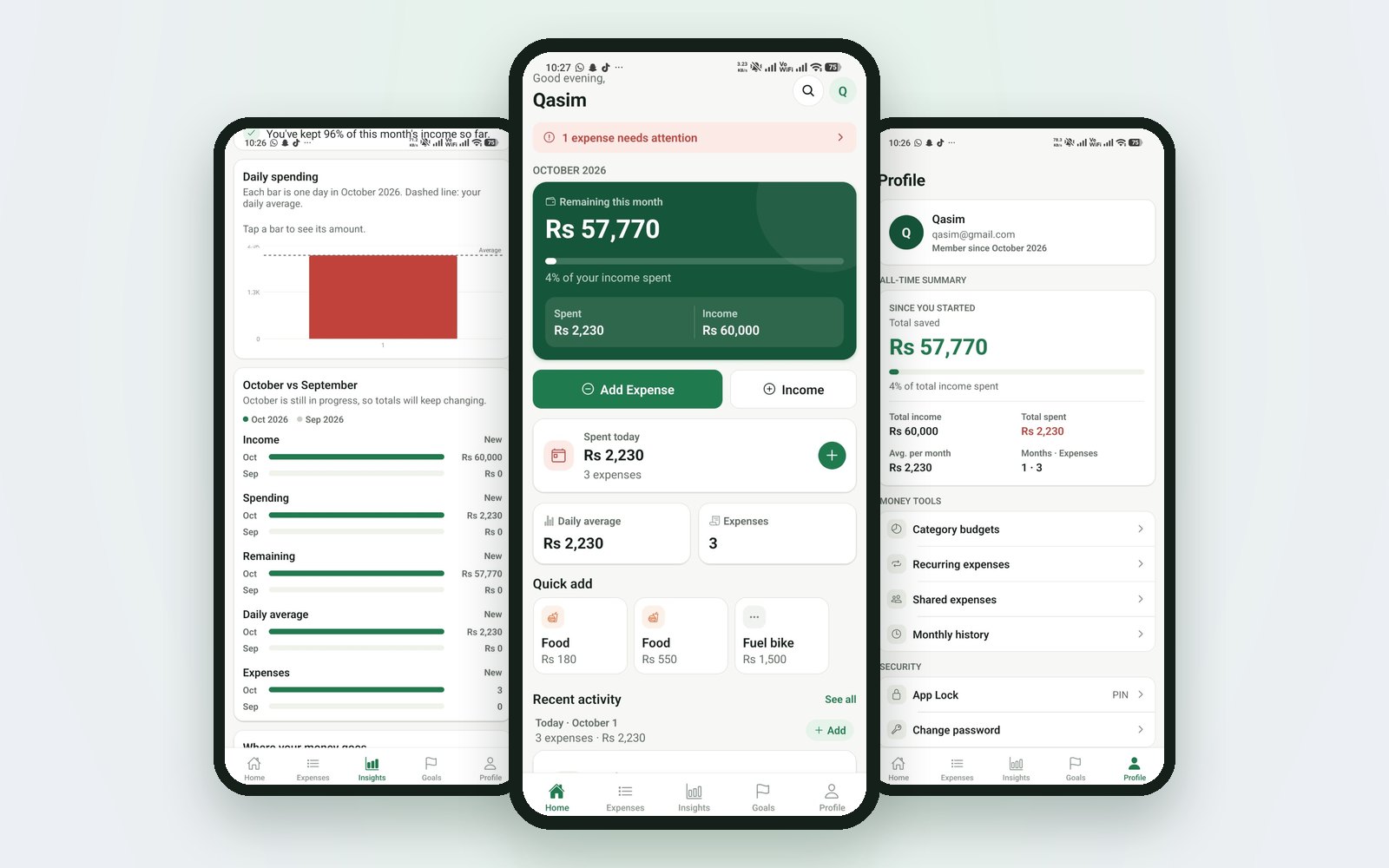
The pattern I used for Spendora, an offline-capable expense tracker is an outbox: every change is written locally first, each new record gets a client-generated ID, and the server applies queued actions individually and idempotently. Nothing is lost when the connection drops, and nothing is duplicated when it comes back.
The details — queue design, conflict handling and what the server must guarantee — are in building an offline-first app with React Native and Django.
09Security by design, not as a final checklist
Security added at the end is mostly paint. The decisions that actually protect users are architectural: how sessions are stored, how authorisation is enforced, how tenants are isolated, what data you choose not to collect at all.
My defaults are deny-by-default permissions checked on every object, tenant scoping enforced in a default query manager rather than remembered per query, secrets kept out of code and logs, and the least data the product genuinely needs. For mobile clients, tokens go into the platform secure keystore, never plain storage.
Personal finance is a good stress test of these ideas, because users are rightly suspicious. I wrote a user-facing checklist on whether a personal finance app is safe that doubles as an architecture checklist for any app holding sensitive data.
Security also lives in the boring operational details: dependencies kept up to date, backups that are actually restored in a test now and then, separate credentials for staging and production, and admin tools that require the same authentication as the product. Most real incidents I have seen started with one of these, not with a clever attack.
- Authorise per object, not just per route — "can this user see this record?" on every read.
- Make tenant isolation the default, with an explicit escape hatch for admin queries.
- Collect less: data you do not store cannot leak.
- Rate-limit authentication and any endpoint that sends messages or costs money.
- Log security-relevant events, but never log tokens, passwords or full payment details.
10Observability and decision records
You cannot operate what you cannot see. From the first deploy I want structured logs with a request ID that follows a call through the API and into background jobs, error tracking that groups exceptions, and a handful of metrics that matter to the business — not just CPU graphs. Alert on the absence of expected activity too: no webhooks in an hour is often a bigger problem than one failed webhook.
Good observability also changes how a team talks about performance and reliability. Instead of "the dashboard feels slow", you can say "the leads endpoint is slow for tenants with large histories because of one query", which is a problem someone can fix this afternoon. Without data, architecture discussions become opinions; with it, they become engineering.
The second half of operating a system over time is remembering why it looks the way it does. I keep short architecture decision records: one page per significant decision with the context, the options considered, what we chose and what would make us revisit it. They take ten minutes to write and save hours of re-arguing settled questions — and they are one of the clearest habits that mark what makes a senior developer different from a strong mid-level one.
A decision record does not need to be right forever. It needs to say what you knew at the time, so the next person can tell when the facts have changed.
11How architecture evolves — and how to work with me on yours
No architecture survives contact with growth unchanged, and it should not. The goal is evolvability: boundaries clean enough that you can extract a module, add a read replica, introduce a queue or move search to a dedicated engine without touching everything else. Evolve in response to measured pain, one step at a time, and record why.
A typical path I have seen work: a modular monolith on PostgreSQL, then background workers as slow tasks appear, then targeted caching and better indexes as data grows, then — only if team structure or scaling demands it — extracting one well-bounded service. Most products never need the last step, and that is a success, not a limitation.
If you are planning a new product or untangling an existing one, I design and build these systems end to end as a web application development service, with the backend on Django and PostgreSQL where it fits. For multi-tenant products, my SaaS development work starts with exactly these architecture decisions. Get in touch with a short description of what you are building and where it hurts today.