01What a SaaS MVP is actually for
A SaaS MVP exists to answer one question: will a specific type of customer use this workflow and pay for it? Everything in the first version should help answer that question, and anything that does not is scope you are paying for with time.
That framing matters because most MVPs I see in proposals are really version two with a smaller budget. They try to serve three customer segments, replace two existing tools and integrate with five others. The result is a long build that launches to a market that has not been tested yet.
This article is the deep dive on scope and timeline from my broader SaaS development guide, which covers the full journey from idea to launch.
An MVP is the smallest product that completes a real workflow, not the smallest number of screens.
02What goes in a SaaS MVP
The core workflow is obvious. What founders miss are the supporting pieces a paying customer touches before and after that workflow. Without them you do not have a product; you have a demo.
These are the pieces I treat as non-negotiable in a SaaS MVP, because each is cheap to build properly at the start and expensive to retrofit:
- Sign-up, email verification, password reset and invitations to a team.
- A tenant model, with every record scoped to a tenant from the first migration.
- A small role model, usually owner, admin and member, checked on the server.
- The one core workflow, complete from start to finish, including empty states and error states.
- Payment: at least one plan, a trial or checkout and a way to cancel.
- Transactional emails for the moments that matter, such as invites, receipts and failed payments.
- An internal admin view so you can support customers without touching the database.
- Basic monitoring: error tracking, uptime checks and automated backups.
03What to cut from the first version
Cutting is the real skill in MVP scoping. My rule is to cut anything that serves a customer you have not talked to yet, anything that adds configurability no one has asked for, and anything that can be done manually behind the scenes while volume is low.
Manual is underrated. If enterprise customers need custom invoices, you can issue them by hand for the first few months. If data import is complex, you can do it for each new customer yourself. Doing things manually teaches you exactly what to automate later, and it costs nothing in development time.
- Multiple pricing models. Start with one simple structure and change it once you have data.
- Custom roles and fine-grained permission editors.
- White-labelling, custom domains and theming.
- Native mobile apps, unless the workflow genuinely happens on a phone.
- Speculative integrations nobody has asked for by name.
- Advanced reporting. Ship one useful dashboard view, not a report builder.
- Public API for third parties, unless that is the product.
Cut features, never foundations. Tenant scoping, roles and a clean data model stay in the MVP even when everything else goes.
04How long does it take to build a SaaS MVP?
Honest answer: it depends on how complex the core workflow is and how many external systems it touches. But the shape of the timeline is consistent across the SaaS products I have worked on, and thinking in phases makes estimates far more reliable than a single number.
In my experience, a focused MVP built by one experienced full stack developer or a very small team typically lands somewhere in the range of two to four months. Products with heavy integrations, regulated data or real-time features take longer. The phases below are general ranges, not promises, and each ends with something the founder can see and click.
- Discovery and design, roughly one to two weeks: the workflow, the data model, key screens and what is explicitly out of scope.
- Foundations, roughly two to three weeks: project setup, authentication, tenants, roles, deployment pipeline and staging environment.
- Core workflow, roughly four to six weeks: the actual product, built in weekly slices that are demoed as they land.
- Billing, onboarding and emails, roughly one to two weeks: plans, checkout, webhooks, trial handling and the first-run experience.
- Hardening and private beta, roughly two weeks: bug fixing, performance, backups, monitoring and real users on the product.
05The mistakes that blow up MVP scope
Most delayed MVPs I have seen were not slowed down by hard engineering. They were slowed down by decisions that kept reopening. These are the patterns I watch for from the first call.
The first is designing for every future customer. A founder imagines agencies, enterprises and solo users, and the data model tries to serve all three. Pick one, design for them and accept that the second segment may need changes later.
The second is pixel-perfect design before the workflow is validated. Good UX matters, but weeks spent polishing screens that change after the first user test is the most common waste I see. Use a solid component library and refine once real usage tells you which screens matter.
The third is the moving target: new features added mid-build because a prospect mentioned them. Keep a parking list. Anything that is not required to complete the core workflow goes on it and gets reviewed after launch.
The fourth is leaving billing and deployment to the end. Both always take longer than expected, and both expose problems in the data model. Get a staging deploy running in the first fortnight and a test-mode payment working well before launch.
06How tenancy, billing and dashboards fit into MVP scope
Three areas cause the most debate in MVP planning, and in each case the answer is to build a simple version properly rather than skip it.
For tenancy, a shared schema with a tenant column enforced by default is quick to build and safe enough for almost every early product. I explain why in choosing a multi-tenant isolation model. Skipping tenancy entirely to save a week is a classic false economy.
For billing, one plan, a trial and hosted checkout are enough at launch, but the webhook handling behind them must be idempotent from day one. The details are in building subscription billing with Stripe.
For dashboards, ship one screen that answers the question your customer opens the product to ask, and leave report builders and exports for later.
07Keeping a SaaS MVP on schedule
Weekly demos are the single most effective schedule control I know. When a founder sees working software every week, scope questions surface early, misunderstandings get caught in days rather than months and nobody is surprised at the end.
Write down what is out of scope as clearly as what is in. Agree on a definition of done for the MVP: the specific workflow a specific user can complete, including payment. And keep one person accountable for saying no, because every feature request sounds reasonable on its own.
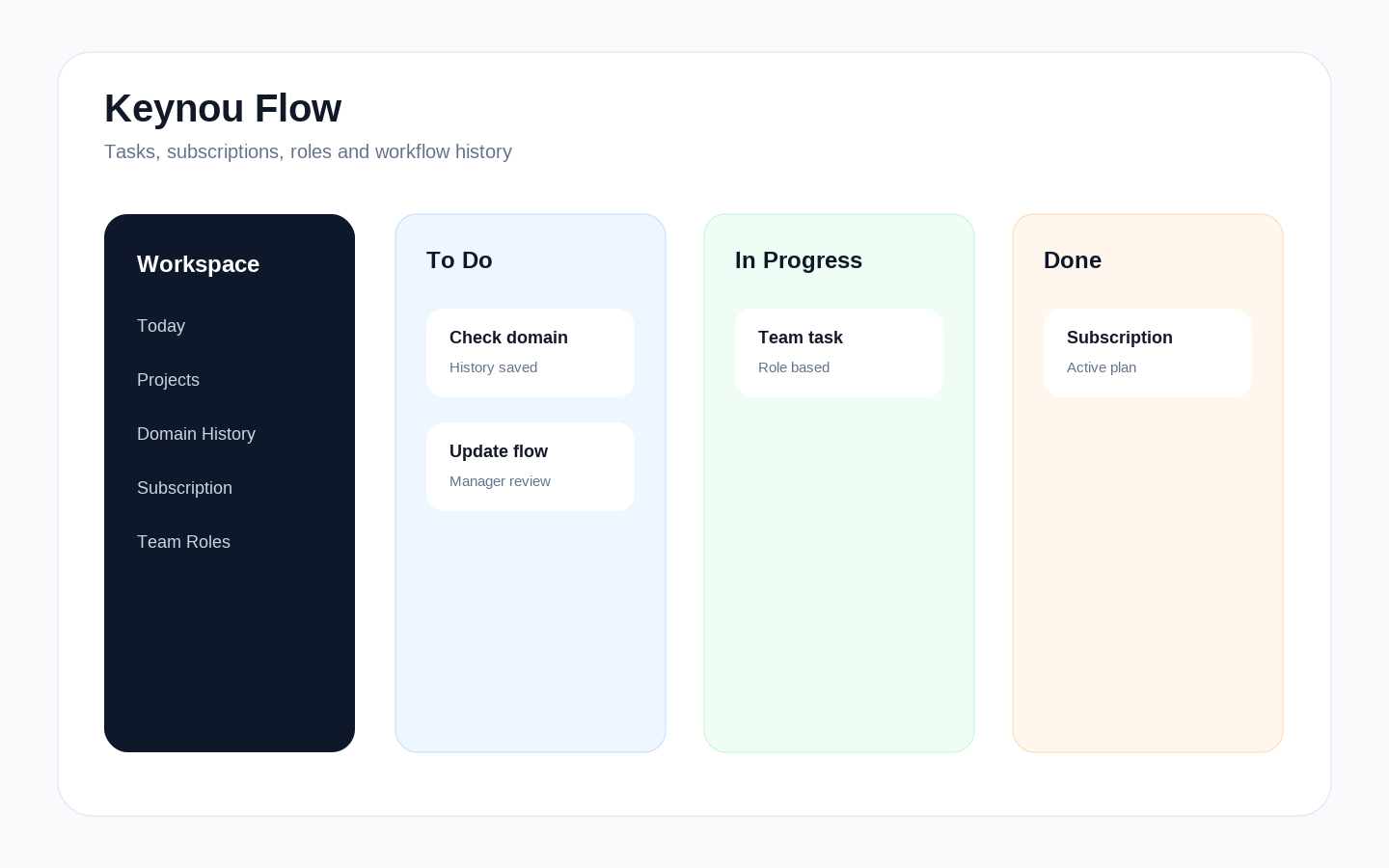
Budget follows timeline, so if you are also working out what a build like this should cost, my breakdown of what a full stack developer costs covers the factors that drive quotes. For a real example of a subscription-based workflow product built with Django and Next.js, see the Keynou Flow SaaS case study. And if you want help scoping or building your first version, my SaaS MVP development service starts with exactly this scoping exercise.
- Weekly demo of working software on a staging URL.
- A written out-of-scope list and a parking list for new ideas.
- A single definition of done for launch.
- Billing and deployment tested well before the final weeks.