01Monolith vs microservices: what the choice actually is
The monolith vs microservices debate is usually framed as old versus modern. It is neither. It is a trade between operational simplicity and independent deployability, and the right side of that trade depends almost entirely on how many teams you have and how differently the parts of your system behave.
A monolith is one deployable application, usually with one database. Microservices are several independently deployed applications, each owning its own data, talking over the network. Everything else — containers, Kubernetes, event buses — is tooling, and you can use most of it with either shape.
This article goes deep on one decision from my broader guide to software architecture for web applications. The short version: for most teams I work with, the answer is a modular monolith.
02What microservices genuinely cost
The costs of microservices are rarely on the diagram. A function call becomes a network call that can time out, fail halfway, or succeed twice. A database transaction across two features becomes a distributed workflow with compensating actions. A stack trace becomes a trace you have to reconstruct across several services and log streams.
Data is where the pain concentrates. Reports that used to be one SQL join now need data from three services, so you either call all three at request time and accept the latency, or copy data between them and accept that copies drift. Neither is wrong, but both are work a monolith never asked of you.
Then there is the fixed overhead per service: its own CI pipeline, deploy configuration, monitoring, secrets, dependency upgrades and on-call knowledge. With three developers and eight services, every developer is effectively maintaining an operations platform alongside the product.
- Network failures replace in-process calls: you now need retries, timeouts and idempotency everywhere.
- No cross-service transactions: consistency becomes eventual, and you must design for that.
- Local development gets harder — running the whole system on a laptop becomes a project of its own.
- Refactoring across a boundary means coordinating API changes and deploy order between services.
- Debugging needs distributed tracing to be as easy as reading one log file used to be.
The real cost of microservices is not the servers. It is that every boundary you draw becomes a contract you can no longer change with a simple refactor.
03Why a modular monolith is usually right for small teams
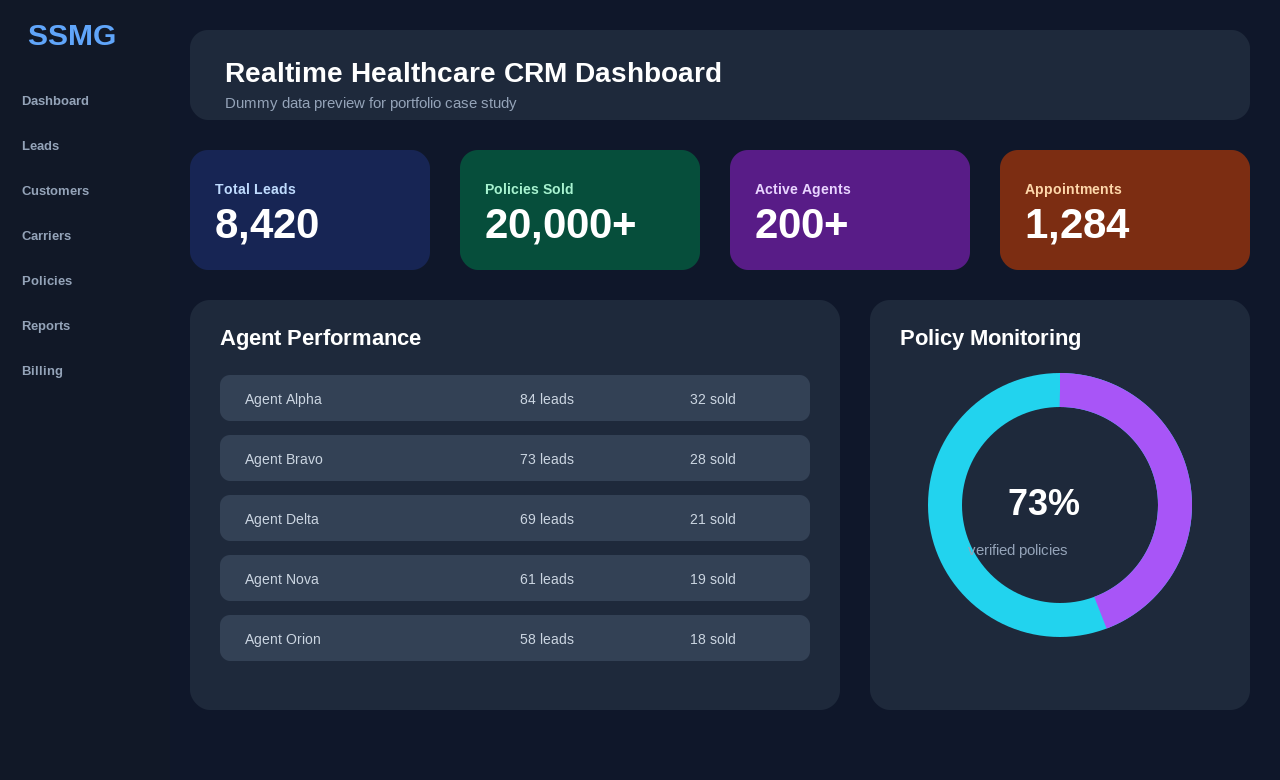
A modular monolith keeps the operational simplicity of one deployable while borrowing the discipline that makes microservices attractive. The application is split into modules — leads, billing, users, reporting — each owning its tables and exposing a small set of functions. Other modules call those functions; they never reach into another module's tables.
You get one deploy, one database transaction when you need it, one place to search, and refactors that your editor can do safely. You also get boundaries that are real enough to extract later, because the coupling is already visible in the imports.
Large systems I have built work this way. CallLoom covers dialers, call routing, recordings, QA review, transcription, billing, tenants and webhooks in one production system, built as backend modules for dialers, routing, logs and permissions rather than a fleet of separately deployed services.
- One repository, one deploy pipeline, one set of logs.
- Module ownership of tables, enforced by convention, code review and linting rules on imports.
- Background workers for slow or bursty work, sharing the same codebase.
- Clear internal APIs between modules, so extraction later is a move, not a rewrite.
04How far can a monolith scale?
Much further than its reputation suggests. A single application can run as many identical instances behind a load balancer, and a well-indexed PostgreSQL database with a read replica handles the load of most business software comfortably. The monolith is rarely the bottleneck; a missing index, an unbounded list or synchronous work inside a request usually is.
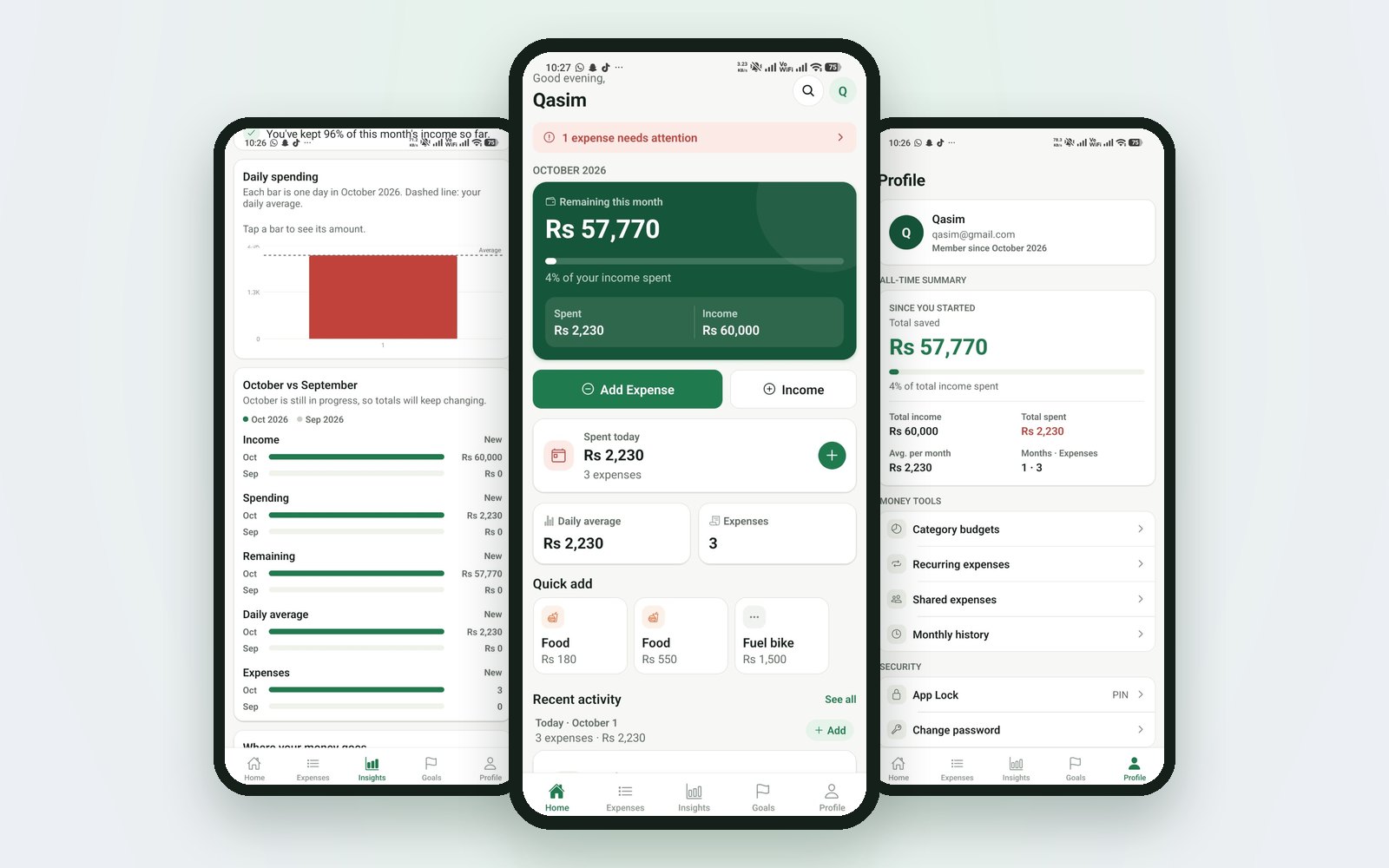
Before blaming the architecture, I work through the cheaper fixes in order: profile the slowest endpoints, fix the queries behind them, move slow tasks to background workers, paginate everything that can grow, and only then add caching. On Spendora, for example, search stayed fast as data grew because of cursor pagination and matching indexes, not because of any change in deployment shape.
Background workers deserve a special mention. Running the same codebase as separate worker processes gives you much of the scaling benefit people want from microservices — heavy work isolated from web requests, scaled independently — without a second codebase or a network contract to maintain.
- Scale horizontally: run more instances of the same application.
- Add a read replica for reporting-heavy workloads before considering a separate service.
- Use worker processes for media, exports, imports and third-party syncs.
05Signals that you actually need to split
There are legitimate reasons to extract a service, and they are specific. If none of these apply, the pain you are feeling is usually a modularity problem inside the monolith, and splitting will move it onto the network rather than solve it.
Notice what is not on the list: "the codebase is big", "we want to use a different language for fun", or "it is what large companies do". Size alone is handled by modules. Large companies use microservices because they have hundreds of engineers, which is the problem microservices exist to solve.
- Several teams regularly block each other on deploys or merge conflicts in shared code.
- One component has a very different scaling profile — for example, heavy file or media processing next to a light CRUD admin.
- One component needs different reliability or isolation, such as payment handling or a regulated data store.
- A component needs a genuinely different runtime, like a GPU-backed processing worker.
- A module already has a clean boundary, its own data and few synchronous callers — it is effectively a service already.
If you cannot draw the boundary cleanly inside the monolith, you will not draw it cleanly across a network either.
06A safe migration path from monolith to services
When a split is justified, avoid the big-bang rewrite. Rewrites stall feature work for months and tend to reproduce the old problems in new code. Extract one module at a time, starting with the one whose signals are strongest and whose boundary is cleanest.
The sequence I follow is deliberately boring. First, tighten the module boundary inside the monolith until nothing else touches its tables. Then put its public functions behind an interface that could be either a local call or a network call. Move its data to its own schema or database. Finally, deploy it separately and switch the interface to the network implementation behind a feature flag, so you can roll back in minutes.
Expect to need things you did not need before: idempotent endpoints, retries with backoff, and webhook-style events between services. My notes on designing integrations that fail safely apply just as much to your own services talking to each other as to third-party APIs.
- Pick one module with the strongest reason to split; do not extract several at once.
- Enforce the boundary inside the monolith first, then move the code.
- Split the data before or alongside the code — shared tables mean you have not really split.
- Use a feature flag to switch callers, and keep the old path until the new one has proven itself.
- Add tracing and correlation IDs before the first network hop, not after the first incident.
07How this decision reflects on the team making it
Choosing an architecture that matches the team, not the conference talk, is one of the clearest signs of engineering maturity. It means weighing operational cost honestly, saying no to fashionable complexity, and writing down why — the same traits I describe in what makes a senior developer.
If you are deciding this for a new product or a system that has grown awkward, I help teams design and build modular backends as part of my custom software development service, with the option to extract services later when the signals are real.